
On Friday, March 13, 2020 (yes, Friday the 13th) my district dismissed for a full 6 weeks, at the time of the posting of this blog post, due to the COVID-19 pandemic in California.
It feels like everyone is scrambling; everyone is sharing out resources for distance learning for teachers, Zoom is getting a ton of love these days, and parents are figuring out ways to home school their children. It’s pouring rain and we are being asked to practice social distancing measures to flatten the curve. Oh, and people are hoarding toilet paper.

It’s so easy to get sucked into the hysteria.
Our district decided that all work assigned during this school dismissal would be optional learning opportunities for students. I commend our district leadership for recognizing that equity and access might be an issue for many of our students and have made it clear that these assignments will not be used to determine grades.
With that being said, it makes it a big challenge for teachers to want to spend the time developing meaningful assignments and invest time with distance learning platforms when students know they are optional. For teachers, optional assignments mean that only a handful of students, at best, will engage with them.

I realized I had a couple of options when it came to creating these distance learning assignments. On one hand, I could just assign some review problems from their textbook and help students maintain skills; nothing wrong with this option. On the other hand I could do something to help students engage in new content; is that risky or worthwhile?
Well, I decided to do a little bit of both. Besides, if my students could learn a handful of new things on their own then maybe the 6 weeks won’t feel like such a loss in terms of instructional opportunities.
So, on the second day of our school dismissal I assigned new content for students to tinker with.
My classroom is not traditional and neither are my teaching methods. I ask my students to work collaboratively to learn math. I use guiding questions during an inquiry based lesson to lead my students to discover patterns and develop math algorithms for themselves. I rarely tell them how to do any math problem; I ask them how they think they should proceed and then give them a few suggestions or ideas so they can get started. I teach my students to take risks; that the faster they fail at a problem the sooner they’ll get to the answers they’re looking for. I’m there, answering questions, listening to their conversations, and nudging them in the right direction.
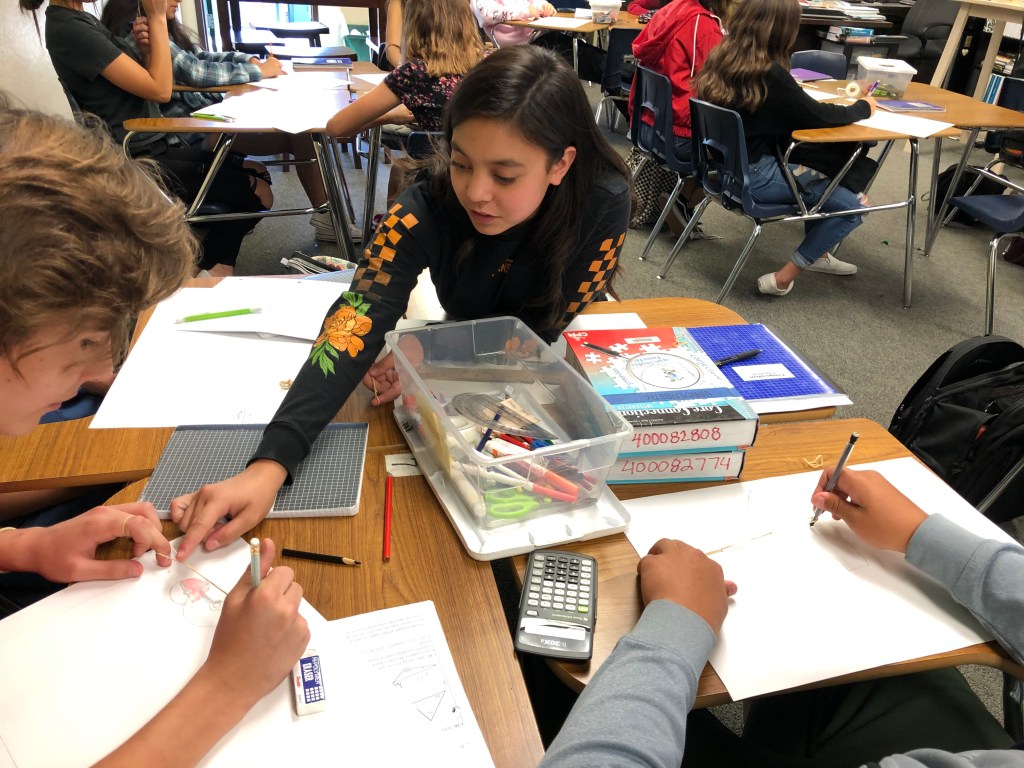
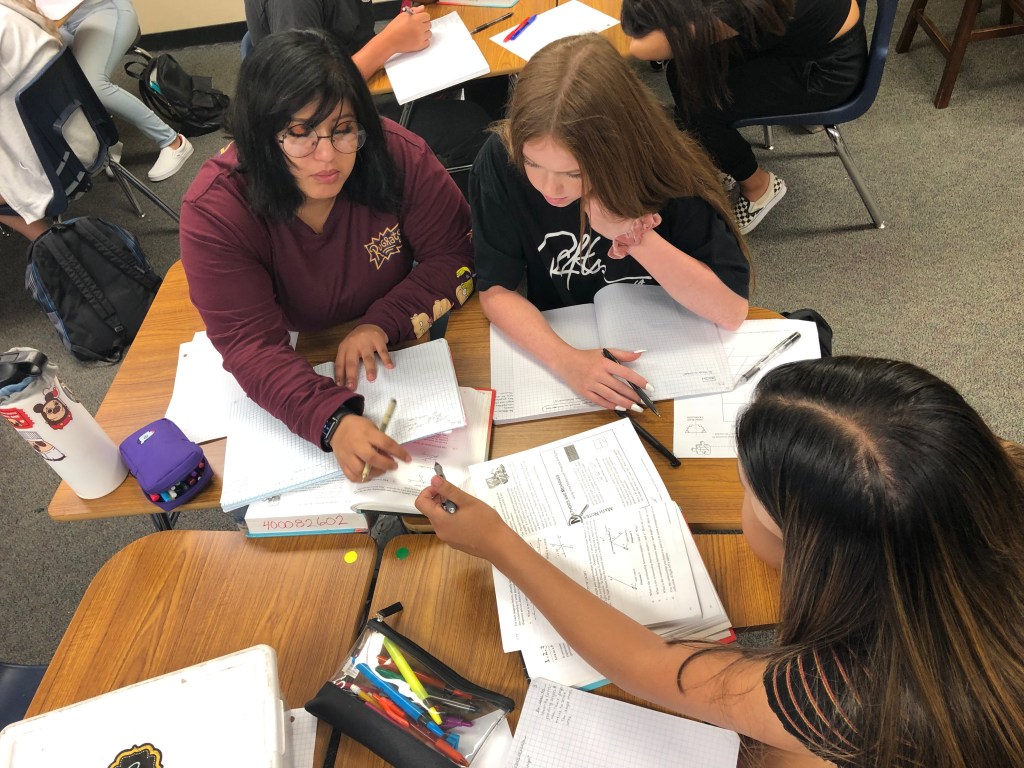
When I start a new lesson, I begin with the objective to help students focus on the goal for the day. Then my students, that work in teams of 4, begin the lesson by working through each problem together. Each student in the team has a role; for example, one is to read the problem out loud, one is to make sure everyone is writing down their work, another is responsible for making sure they work in a timely manner, and another makes sure they have all the resources they need to be successful.
Just as often as I am praised for teaching this way, I’m also criticized. I’ve been told that “I do, we do, you do” is good teaching. I’ve been given research on how Direct Instruction is still the best model because it’s tried and true; because students need direction otherwise they might do math wrong…especially in a situation like a school closure.
My hope is that I’ve prepared my students for this moment. This moment where my students are having to grapple with a [math] problem on their own and make sense of it without me just a few feet away from them. My hope is that my students dive in; that they see a math problem and just jump in to solve it.
My hope is that my students aren’t sitting in front of a computer screen, looking at that math problem, waiting for me to tell them exactly what to do.
My hope is that my students pulled out their notebooks, read through the problem and tried something, anything really, and tinkered with the math they already know in order to solve it…like they do, almost every day, in our math class.
My hope is that they reached out to their classmates, their friends, their parents, their anybody and tried to find solutions together; that they worked collaboratively with others to learn something new. My hope is that their text messages during this time included some math conversations because they wanted to figured out the solution because they felt confident enough to do so with just a little help from friends. My hope is that I can assign new content, that my students know how to access it, and that my students know that their best effort is enough.
My hope is that in my absence my students can do math.
~PV
 Patricia Vandenberg
Exactly where I am at. Thank you for articulating so many things I am thinking about. The optional piece and whether to pour my heart and soul into something that few will do makes me feel so conflicted. I hope my students will dive in, but they want direction and a bunch of “generic” problems without scaffolding will not get them going. So do I scaffold and make fun slides and cheer them on without interacting with them for two more weeks (equity issues friend)? Your girl in Nor Cal
LikeLiked by 1 person
It’s so hard to say what’s the right move. I think whatever choice you make, just make one that you know you can defend. Ask yourself, “is it what’s best for kids?” For me, I’m taking a less is more approach. I want my Ss to do a few things really well so the assignments I build are going to help support that. Best of luck!
LikeLike