West Ada Math Symposium

Oh, hey there!  It’s been a minute since I last wrote and figured it was time to dust off this old blog and bring it back to life.  The last couple of years have been a whirlwind of new adventures, challenges and successes.  I’m excited to share the highlights with you!

You guys…I landed my dream job.  I’m the Coordinator for Math Curriculum & Instruction in the largest district in Idaho:  West Ada School District.  I oversee all the math curriculum, resources, and instruction that takes place in kindergarten through 12th grade classrooms.  

We serve just about 40,000 students and 2,100 teachers across 58 schools.  The next largest district in our state is half our size.  And because I know you’re numbers people, this equates to about 750 elementary teachers and 200 secondary math teachers that I have the honor of supporting.

As you can imagine, moving a system this large, instructionally, is a challenge.  We often describe it as sailing a ship. We literally can’t change course quickly; it takes time, courage, patience, and a plan.

Thankfully, the captain of our ship is an inspirational instructional leader.  Our superintendent, Dr. Derek Bub, is a visionary that is experienced, knowledgeable, and compassionate.  His compass always points towards kids. He’s the same leader I wrote about in this blog many, many years ago.  So, when I say I would follow him to the moon, I mean it.  I admire that Dr. Bub listens with intention, draws his power from relationships, and encourages the people around him to dream big. 

The Big Math Project

Within days of starting my new job Dr. Bub called me into his office and asked, “What if…” and began the conversation that would become our beloved West Ada Math Symposium.  What I hope to share with you now is how we strengthened a culture of learning among the math teachers in our district through the Math Symposium.

We wanted to turn the ship.  We wanted to provide consistent and impactful professional learning that would have a greater return on investment than, say, sending a few teachers to a conference.  And we wanted to use our ESSER funds to invest in our teachers, not in things.

Then, we started to *dream*.  We started to brainstorm the names of the most influential math educators that we have learned from over the years.  Dr. Bub and I both came from Southern California where we were surrounded by brilliant math minds that would flock to Southern California for conferences such as NCTM and CMC-South. 

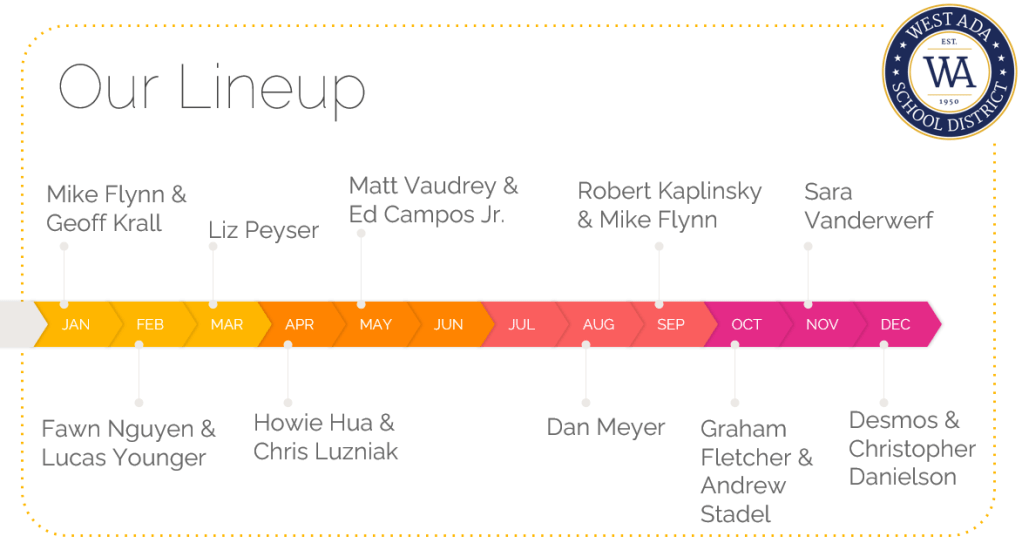
Robert Kaplinsky and Fawn Nguyen immediately came to mind. Dan Meyer, Sara Van der Werf, Howie Hua, Chris Luzniak, Geoff Krall, Mike Flynn, Graham Fletcher, Matt Vaudrey… Our list was not short. And for once, neither was our budget. It was the perfect storm to create something amazing: We had the vision, I had the connections, and we had the funding! We got to work and built the West Ada Math Symposium.

The Math Symposium

Our Math Symposium was a series of 10 full-day workshops, held on one Saturday per month, each featuring a different math educator. We initially invited only one teacher from each of our 58 schools to participate in the Math Symposium.  Our original budget would only allow for this many but through the generosity of our Superintendent and our school board we were able to accept everyone who applied (96 teachers).  We asked these teachers to commit to attending at least 9 out of the 10 Saturdays and we would honor their time with a $5,000 stipend, paid through ESSER funds, at the end of the series.

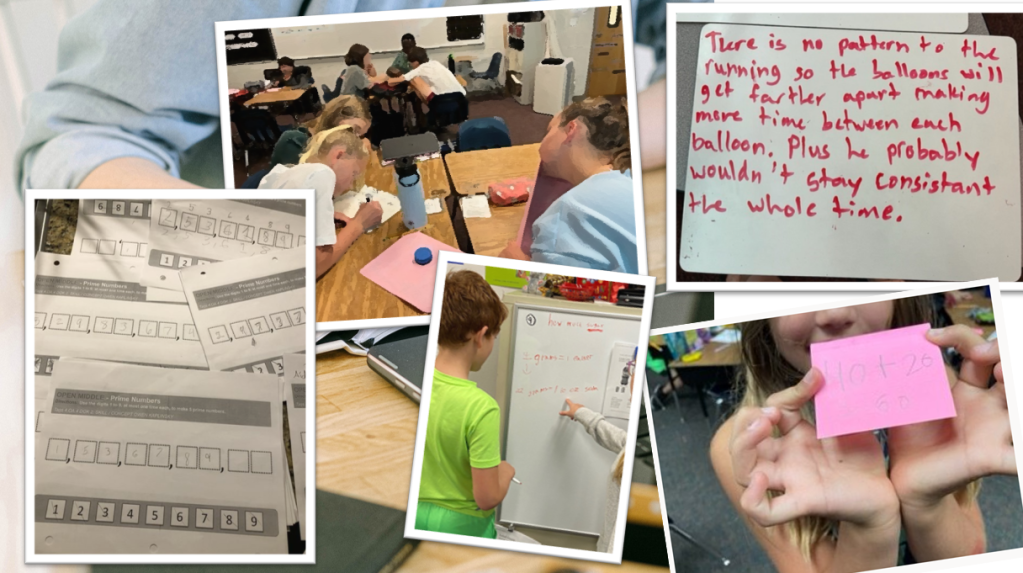
In addition to attendance, teachers also complete a reflection assignment that we called a, “TIY” or “Try it Yourself” for each Math Symposium they attended.  We asked teachers to take what they learned and try something with their students.  Their assignment included an opportunity to reflect on what went well and what they would do differently next time.  We also asked teachers to submit evidence like student work samples, pictures or video of their classrooms, or their detailed lesson plans.

The TIY Assignment

There really were 3 reasons why we asked teachers to complete a TIY assignment:

First, we wanted teachers to take what they learned and try something in hopes that maybe 1 or 2 things “stick.”  We were very realistic, from the beginning, that everything a teacher learns over the course of 10 Saturday’s won’t stick

…but if we could get at least 1 thing to stick it would have been worth it.  Almost 100 teachers shifting their practice in at least one way–that’s a win in our book.

Second, we needed to hold teachers accountable for the stipend they would be earning.  It was an easy way to assess their attendance, what they learned, and how they put it into practice.  

Third, having those completed reflections made it real easy to provide evidence of impact to our district leaders and board members—we had teacher written reflections and pictures to share every month!
The Lineup of Speakers

At the start, we asked teachers what they wanted to learn more about and who they wanted to learn from.  We got a few suggestions but for the most part we knew we wanted to change hearts and minds around math education in our district so that influenced who we invited.  We were so fortunate to have a powerhouse line up of speakers.  And honestly, there were so many more that we wanted to invite but we ran out of Saturdays!  Trust us, we’re already dreaming about Math Symposium 2.0. 
There was definitely a bit of celebrity involved.  I mean, our teachers were using Dan Meyer’s Google Sheet of 3-Act Tasks for a while but to have the man himself come work with our teachers was a once in a lifetime experience for some…and the first time some teachers learned about a little thing called Desmos

Chris Luzniak came to work with our teachers and as a result invited one of our math coaches to be on his Debate Math podcast!  Not only did we get to learn from Chris but now we’re building capacity and expanding horizons for a teacher that might have gone her whole career not learning about Debate Math. 

It was so cool when Fawn Nguyen was with us working on visual patterns and learning about rich math tasks.  Our teachers have seen Graham Fletcher’s progression videos and know of him.  When Fawn mentioned his name, there was an audible gasp in the room when I said, “Graham’s coming in October”! 

The most beautiful part of the line up is that each speaker reinforced what previous speakers taught and often alluded to learning that would happen in a future Math Symposium.  Teachers are making powerful connections because of consistent and continued opportunities to learn. 
Top: Robert Kaplinsky and Graham Fletcher
Bottom: Chris Luzniak, Dan Meyer, Fawn Nguyen

The Outcomes

When we take a step back and reflect on the impact our Symposium has had on our teachers, we can narrow it down to 3 powerful elements.  And don’t worry, a big budget isn’t one of them.  We believe, whether you have a big budget or no budget, if Professional Learning contains these 3 elements it will be impactful learning that shifts hearts and minds in the right direction.
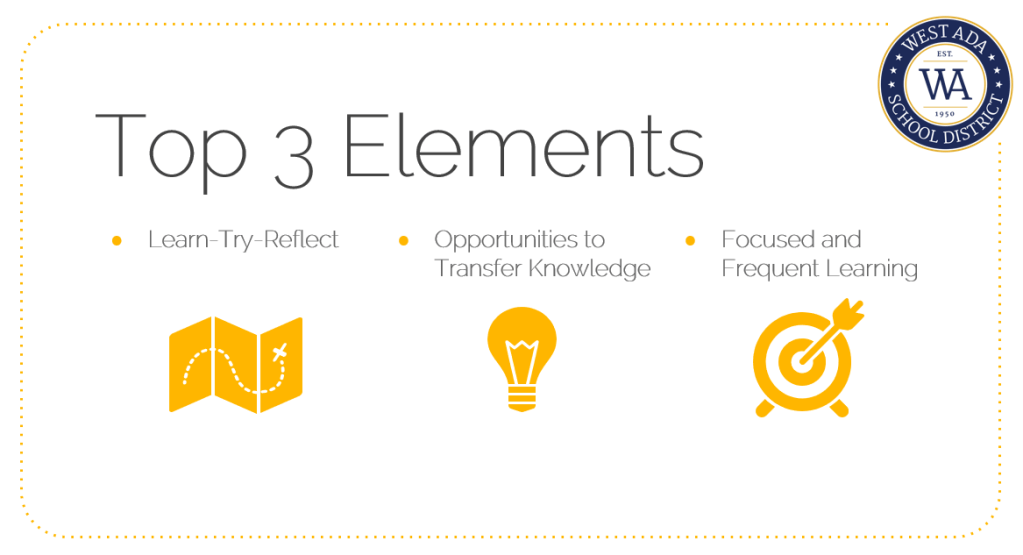
First, Professional Learning should have a “Learn-Try-Reflect” structure. It was so powerful that our Symposium was structured so that teachers learned something, then tried it out, and then reflected.  We encouraged teachers to be brave and take a risk.  In the words of Matt Vaudrey, we made failure cheap.

Second, Professional Learning is more impactful when teachers are inspired to transfer the knowledge to others. We created this excitement around learning that made it feel a little exclusive. Remember how we originally said we only wanted 1 per building? The exclusive feeling has led to teachers wanting to share what they learned because they know they were the “only one” from their building that could come. A highlight for Dr. Bub has been walking into buildings and seeing an entire PLC incorporating the same instructional strategies that one teacher learned from Math Symposium.

Moreover, teachers often only work with teachers in their building (or within their own PLCs) and this created the opportunity to collaborate with teachers from different schools.

Third, create focused and frequent Professional Learning opportunities. Districts are often accused of having too many initiatives which cause teachers to feel pulled in different directions.  All the ideas are great ideas but it feels unfocused and overwhelming.  Revisiting learning regularly throughout the year and adding on keeps the learning alive and can create a lasting impact.  It’s not a new initiative or one more thing.  It’s spiraled and scaffolded.  

We realized we had built something special when teachers returned, month after month, not only learning more but reinforcing what they had already learned.  This focus allowed teachers to make powerful connections with their learning each month.  

The Impact

We have seen a difference in our teachers as a result of our Math Symposium and the support of our Superintendent, district leaders, and school board.  We used to think of school as reading, writing, spelling…and math.  Math is now included.  Math is a priority for the whole district and that’s helped the culture to shift.  And everyone is talking about it–teachers, building leaders, district leaders. 
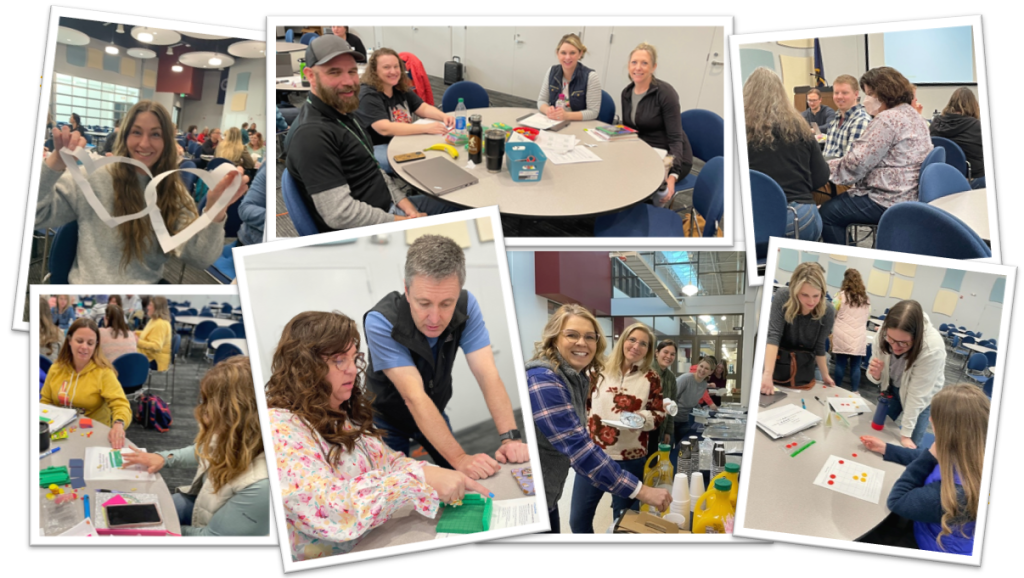
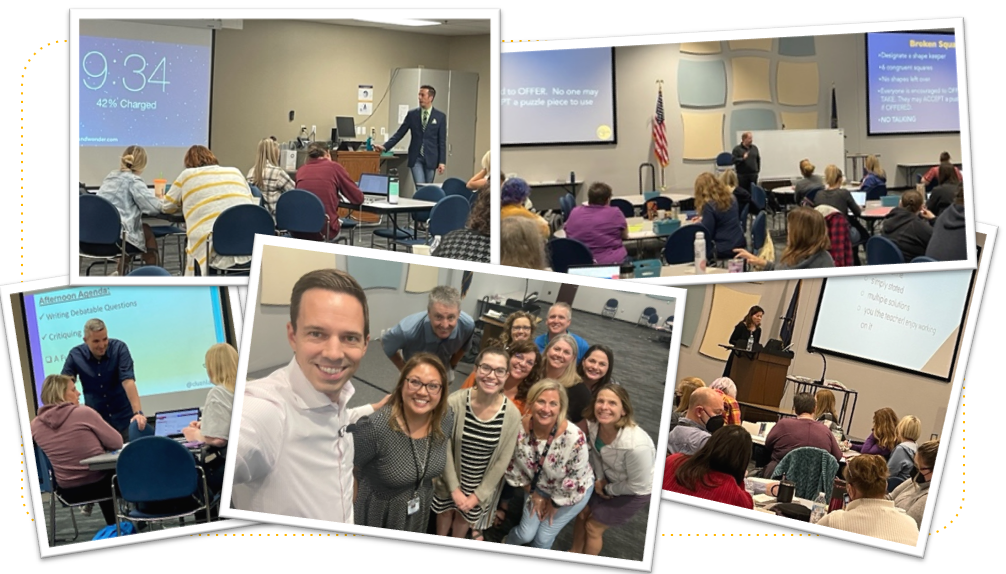
West Ada Math Teachers at the Math Symposium

How can you build a culture of learning?

We were so blessed with the opportunity to create the West Ada Math Symposium and my hope is to encourage you to build something that builds a culture of learning among math teachers around you.  

Lead a book study that includes a schedule with follow up meetings and discussions.  Create opportunities for teachers to apply their learning, share with others, and reflect on their practice.

Send teachers to a math conference and create an opportunity to share, apply, and reflect.  Encourage teachers to be brave and take a risk in their classrooms!  Make failure cheap!

Invite one keynote speaker to work with your teachers.  They’re more affordable than you probably think and you can never duplicate the inspiration and excitement that naturally comes from a guest speaker!  Then, ask that speaker to connect with teachers a few times during the school year to extend the learning.  Every speaker we have invited to our Math Symposium were more than willing to connect and extend the learning.

We reflect back on why teachers initially signed up and what things they asked to learn about.  Teachers really didn’t know what they didn’t know.  That conversation has changed.  Teachers are now equipped with promising practices in math education, finding ways to incorporate them in their teaching, and inspiring others!

The ship is moving.

Stay tuned for Math Symposium 2.0!

-PV

PS–None of this could have been possible without my amazing team of Math Coaches. We’ve been told by many that West Ada is the gold standard in hospitality, logistics, and efficiency. And it’s all because of them. Thank you Amanda, Kip, Sarah, and Tricia.

PSS–To all of our speakers that flew to Idaho to work with our teachers. Your time and talent has made a huge impact on learning in our district and we are forever grateful for the hearts and minds you changed. We hope you’ll consider working with us again. Stay tuned for your invite to Math Symposium 2.0!

My Face Hurts

Today was “Day 1” of year 15 of teaching. It was virtual. And my face hurts.

My face hurts from smiling so big when I met my students today. Like, maybe if I smile big enough they’ll feel my joy for teaching and warmth for students through their screens? I didn’t think I would feel a connection with them through a screen but I did and I’m grateful for it because I realize now that students are what makes teaching great.

My face hurts from talking more than I have for months…and for longer periods of time since schools closed in the spring. And I got tongue-tied often because I was just so excited to be their teacher. I caught myself having to pause often to let my thoughts catch up with my mouth.

My face hurts from laughing with all my colleagues; it’s only Day 1 and we’ve already got stories to share! All the disasters and successes all wrapped up in day 1 of 182 days of school. But, you know what’s really cool? My department hasn’t communicated this frequently before and it’s giving me some real peace knowing we are all in this together.

My face hurts from staring intently at my screen, searching the faces of my virtual students; looking for any signs of engagement. It was such a relief to see smiles, nodding heads, thumbs up, and laughter at my silly mistakes. I was so glad to see some familiar faces in class; last year’s Int Math 1 students that are now in my Int Math 2 classes.

And also…my face hurts from keeping my composure when I saw students not engaged, not paying attention, texting or clearly talking to someone else in the room. I quickly reminded myself it’s all about giving these students grace and in time they’ll engage…and honestly, maybe they won’t and that’s okay too.

We, teachers and students, are learned something new every second of this day and honestly, it was kind of a lot to take in…oh, and it was only a half day today. So, yeah, my face hurts.

Now the real work begins.

~PV

Teaching Students with Higher Needs…Remotely

When you look out at your classroom I know that you know what your students know and what they don’t know they know…you know? But now, we’re looking at a computer screen into the vast internets and I don’t know about you…but I don’t know anymore.

Last fall I wrote this blog post after a keynote with John Stevens, and shared how important it is that we give all students the math they deserve. Well, now we are here during the COVID-19 Pandemic and many teachers are looking for ways to effectively facilitate remote learning for their students. Issues with access and equity immediately come to mind, especially when it comes to students with higher needs.

This tweet from John Stevens prompted me to reach out to one of the best in the business when it comes to serving students with higher needs, my colleague Mike Mann. He’s a high school educational specialist that has been teaching students with higher needs for over 14 years, he’s credentialed in both mild/moderate and moderate/severe disabilities, holds a Master’s in Education…oh, and people seem to like him since he was voted Teacher of the Year a few years back. I reached out to Mike and asked him what his thoughts were on how math teachers could best support students with higher needs and Mike definitely had some wisdom to share.

So, my hope is as you read this, like me, you’ll consider the perspective of a teacher that’s been in the special education classroom for over a decade and that some of the strategies we share here are helpful to you and your students.


Here are a few things to consider: 

How would you help your student if he/she were sitting right next to you in your classroom? 

If the answer generally falls under the practice of: ¨I address their questions on an as needed basis and work through problems together step by step until they demonstrate understanding,¨ then you are probably finding it hard to provide them instruction remotely. After all, in the classroom setting you know exactly what is going on as the teacher. There is nobody better to break down quadratic equations because you’ve been brushing up for weeks making sure you have Unit 5 ready to go. The issue with this approach is that the student becomes over reliant on YOU. So, now with this virus shutting down our schools, you are not right next to them and their parents become the new you. In a healthy way, this exposes some great opportunities for growth as teachers for when we return back to the classrooms. Providing students help in the classroom will always be an important role for us as educators, but for students with higher needs, help isn’t enough… they need strategies! 

To keep it simple, let’s categorize strategies into two departments: Teacher Strategies and Student Strategies.

Teacher Strategies

Break up Steps – breaking up a big problem into smaller mini-problems allows students to find success earlier in the lesson.  For example, if we are asking students to solve a quadratic, maybe our students would find success practicing some of the prerequisite skills prior to the task of solving a quadratic: solving linear equations, finding factors of numbers, factoring quadratics. Let’s give them something accessible to start with so that they can build to the big tasks.

Keep it Short/Brief – You probably have an awesome lesson planned out. After about the first 12-15 minutes, you have now lost the attention of the majority of your higher needs students. What are the most important items your students need to know for today? That should be what we deliver to them. You know when you pick up a Cheesecake Factory menu and can’t decide what to order? Yeah, too much information can be overwhelming and overloading to the student. 

Use Real-life Examples – Connections that students can make within their working memory are more easily accessible when they can visualize themselves or someone else in a problem. If there is a real-life example to be shared… SHARE it!  You know, like all the numbers and graphs that are coming from this pandemic. There are some awesome stats problems, exponential function problems, area under the curve problems, or something about toilet paper that can become the real-life example we are literally living.

Incentivize – Do we not all work for something? I mean, would you come to work if your principal told you all teaching jobs were now volunteer based? Maybe you’re “that teacher” and would show up for a couple of weeks. However, after you realize your own children at home have nothing to eat and the debt collectors keep calling every hour, you will probably stop coming. We need to position students with higher needs in a place that gives them a reason for achievement. If you are sitting there thinking, “what about their grades, isn’t that a good enough reason?” Well, I don’t know. You tell me. Has it been?

The incentives need to target their interests. Remotely, how cool would it be for a student to receive a message from their teacher that said, “Hi Sally, I hope you and your family are safe and healthy during this school dismissal. I know math must be more difficult for you at home without my direct help, which is why I’m excited to have a surprise for you when you get back for completing the work I’ve been assigning through Google Classroom. Will you please give me your top three favorite places to eat? Thanks!”

Student Strategies

Organization – Workbooks, worksheets, etc. need to be clutter free. If students learn to organize their notes, classwork, and homework then they are able to keep the focus on learning objectives with less attention on other executive functioning stressors. If they’ve mastered this in the classroom, great! At home, they should be able to have structure in their tasks, even if provided online. If you knowingly have students that struggle with organization, LABELING will be a huge benefit for students while they’re not in the classroom. Over label if you have to, it’s okay. This is a simple way that will not take teachers a lot of time while making all the difference in the world for students that need assistance keeping up with WHAT they are expected to do. Ultimately, this is a student based strategy because they will need to be able to apply these practices with or without a teacher present, but it is helpful to guide students until they can fully take ownership of being organized.

Color System – This could easily go into the organization category. However, it is too special to be generalized. It needs a category by itself. Pretty simple here. Students learn to use black to write down the problem, blue for step one, green for step two, blue for step three, green for step four, and red to record the answer. The colors chosen are up to the student, but ultimately this also makes it much easier for the teacher to see where in the problem the student “went wrong.” And even if you’re running all your assignments online right now, students can snap a picture and upload their hand-written work.

Utilizing Technology – Students love being on their phones and electronic devices that have video. There are so many good resources available to them. You want to hear something crazy that might give math teachers a mild heart-attack? What if we introduced a completely new section in our math books and our first communication to them was something like:

Okay students, we are going to learn about inverse functions. Here’s the deal, you’re going to do some research on it. I want you to Google and/or YouTube the snot out of this stuff.

Ultimately, you will use class time at home to execute TWO TASKS. One, DEFINE an inverse function. Two, determine how to FIND and VERIFY an inverse function. Rules: Make up any type of problem you’d like relating to inverse functions. Feel free to even use the same problem you found on a YouTube video. Oh, and one more thing, I almost forgot. You will be demonstrating these two tasks in front of the class, so come prepared.”

Do we believe students with higher needs can accomplish such a task? Why not? They might have to watch more videos, use more resources, and practice more problems, but instead of trying to memorize their notes or work within the box they’ve been provided, you just unlocked a scavenger hunt for them and set them free to discover math for themselves, while eventually being able to get guidance and correction from you as the teacher later. 


My collaboration with Mike Mann on this topic has improved my teaching pedagogy and changed my perspective on my students in amazing ways. What I appreciate most about Mike is that not only is he well versed in the law surrounding special education but also in the students he serves and the strategies that best support them. His heart is in the right place, his students are blessed to have him as their advocate, and we are so fortunate to have Mike on our campus.

Let’s continue this conversation!

I truly believe that this teaching thing is better when we work together. What has worked well for you? What are some things you are trying? What would you add to this list of strategies to adequately serve students with higher needs? Drop your suggestions in the comments below.

~PV

Hope for my Students

On Friday, March 13, 2020 (yes, Friday the 13th) my district dismissed for a full 6 weeks, at the time of the posting of this blog post, due to the COVID-19 pandemic in California.

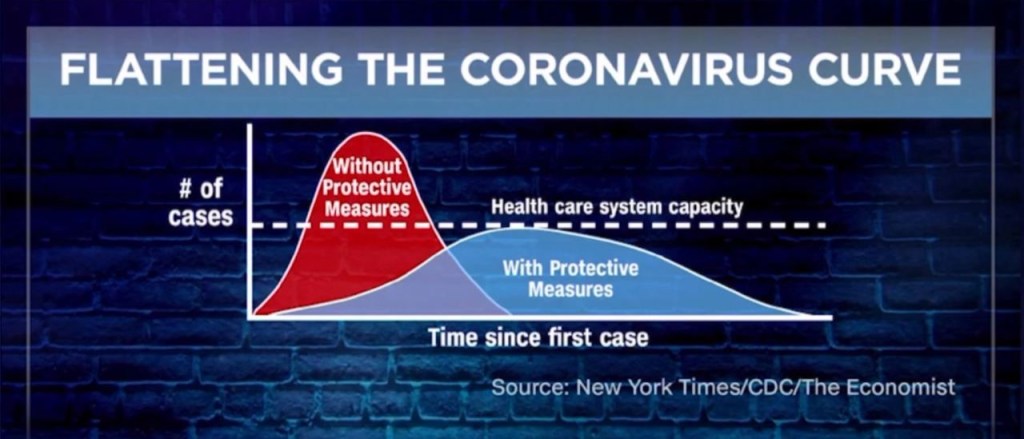
It feels like everyone is scrambling; everyone is sharing out resources for distance learning for teachers, Zoom is getting a ton of love these days, and parents are figuring out ways to home school their children. It’s pouring rain and we are being asked to practice social distancing measures to flatten the curve. Oh, and people are hoarding toilet paper.

It’s so easy to get sucked into the hysteria.

Our district decided that all work assigned during this school dismissal would be optional learning opportunities for students. I commend our district leadership for recognizing that equity and access might be an issue for many of our students and have made it clear that these assignments will not be used to determine grades.

With that being said, it makes it a big challenge for teachers to want to spend the time developing meaningful assignments and invest time with distance learning platforms when students know they are optional. For teachers, optional assignments mean that only a handful of students, at best, will engage with them.

I realized I had a couple of options when it came to creating these distance learning assignments. On one hand, I could just assign some review problems from their textbook and help students maintain skills; nothing wrong with this option. On the other hand I could do something to help students engage in new content; is that risky or worthwhile?

Well, I decided to do a little bit of both. Besides, if my students could learn a handful of new things on their own then maybe the 6 weeks won’t feel like such a loss in terms of instructional opportunities.

So, on the second day of our school dismissal I assigned new content for students to tinker with.


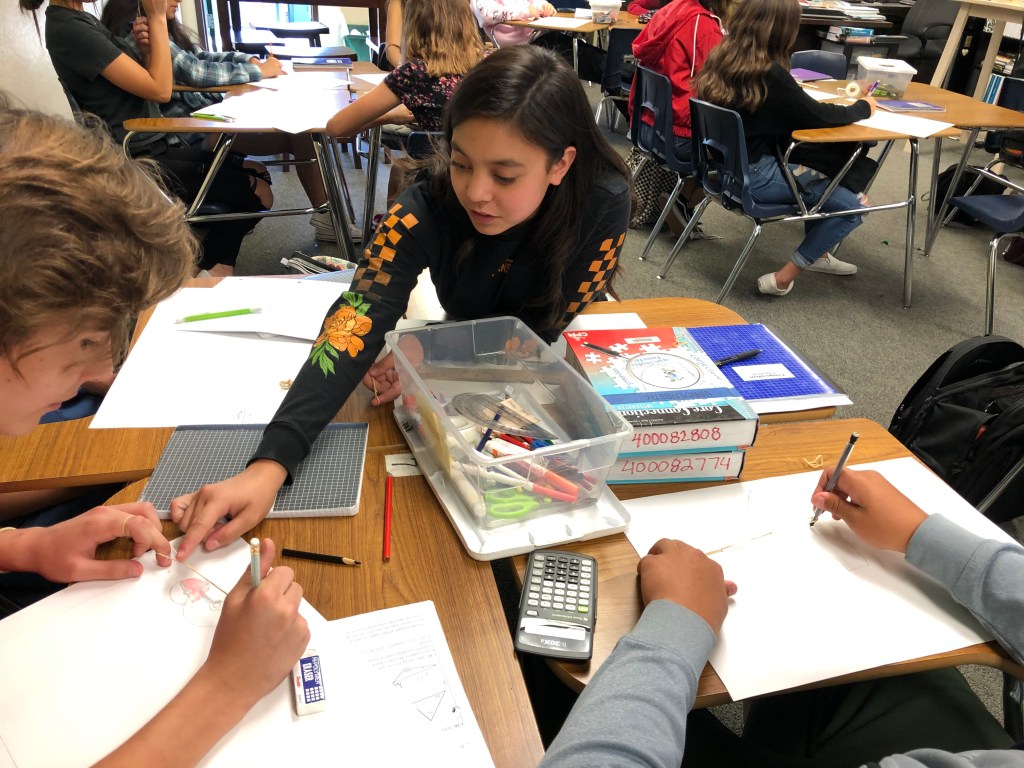
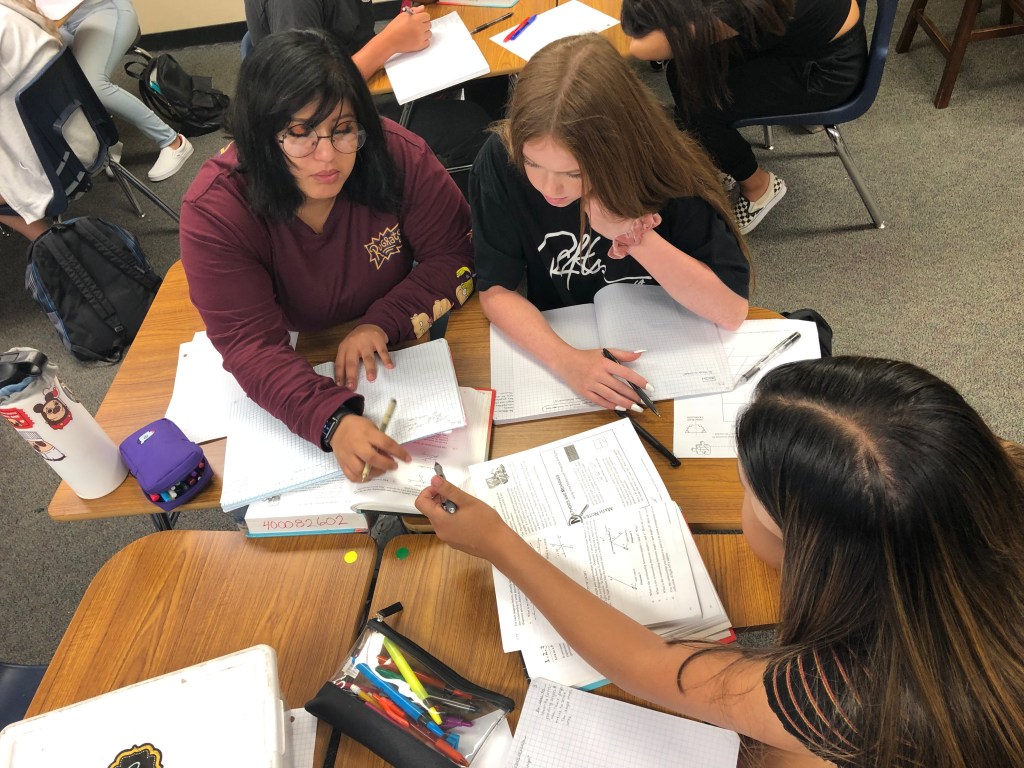
My classroom is not traditional and neither are my teaching methods. I ask my students to work collaboratively to learn math. I use guiding questions during an inquiry based lesson to lead my students to discover patterns and develop math algorithms for themselves. I rarely tell them how to do any math problem; I ask them how they think they should proceed and then give them a few suggestions or ideas so they can get started. I teach my students to take risks; that the faster they fail at a problem the sooner they’ll get to the answers they’re looking for. I’m there, answering questions, listening to their conversations, and nudging them in the right direction.

When I start a new lesson, I begin with the objective to help students focus on the goal for the day. Then my students, that work in teams of 4, begin the lesson by working through each problem together. Each student in the team has a role; for example, one is to read the problem out loud, one is to make sure everyone is writing down their work, another is responsible for making sure they work in a timely manner, and another makes sure they have all the resources they need to be successful.

Just as often as I am praised for teaching this way, I’m also criticized. I’ve been told that “I do, we do, you do” is good teaching. I’ve been given research on how Direct Instruction is still the best model because it’s tried and true; because students need direction otherwise they might do math wrong…especially in a situation like a school closure.


My hope is that I’ve prepared my students for this moment. This moment where my students are having to grapple with a [math] problem on their own and make sense of it without me just a few feet away from them. My hope is that my students dive in; that they see a math problem and just jump in to solve it.

My hope is that my students aren’t sitting in front of a computer screen, looking at that math problem, waiting for me to tell them exactly what to do.

My hope is that my students pulled out their notebooks, read through the problem and tried something, anything really, and tinkered with the math they already know in order to solve it…like they do, almost every day, in our math class.

My hope is that they reached out to their classmates, their friends, their parents, their anybody and tried to find solutions together; that they worked collaboratively with others to learn something new. My hope is that their text messages during this time included some math conversations because they wanted to figured out the solution because they felt confident enough to do so with just a little help from friends. My hope is that I can assign new content, that my students know how to access it, and that my students know that their best effort is enough.

My hope is that in my absence my students can do math.

~PV

Math They Deserve: Engaging Students with Higher Needs

As a SoCal math teacher, I obviously jumped on the opportunity to attend the National Council of Mathematics Teachers (NCTM) Annual Conference when it was in San Diego, CA in April of this year.  It was everything I had hoped for, including a 6AM yoga session with a customized NCTM yoga mat.  Because I only live a few counties over the travel was only a 2-3 hour drive away.

Road Trip.PNG

I had great company on that drive home, Matt Vaudrey and John Stevens.  The two of them had presented at NCTM;  I had the honor of co-presenting with Matt Vaudrey.  After stopping for lunch and sharing some of the takeaways from the conference we started thinking about what we wanted to share with teachers next.

What came from that conversation inspired a keynote presentation for the Orange County Math Council’s (OCMC) Math Tech Night that John Stevens and I co-presented in October, and my workshop session at the California Mathematics Council (CMC) Southern Conference in November.


I’ve spent the last few years teaching what my school calls “Academy” classes.  These are classes that are populated with students that typically struggle in math and would benefit from a class that offers more support and opportunity for success.  So, that meant students that historically had lower grades in math and students that have an IEP or a 504 are typically offered this class as an option, as opposed to the regular, college prep, math class.  We have Academy classes at the Integrated Math 1, 2, and 3 level.  And so, my Integrated Math 2 Academy class is filled with students that did not identify as being a “Math Person” and many of them didn’t have great math class experiences in the past.

They’re already coming in feeling so defeated that I spend a lot of time building up their confidence and trying to change the little voice in their head that says they can’t do this.  But along the way I began to notice that everyone kept telling me that math was just “too hard” for “these students”, meaning the students in special education, students with learning disabilities, students with historically lower grades…students with higher needs.  And it wasn’t just a matter of the math was hard, what I kept hearing was that my students were just not capable, NOT ABLE to do this math, and that some of the math would be impossible for them to learn…SO DON’T EXPECT TOO MUCH.

thumbs up and down

I tried to challenge some of these comments with a more positive and hopeful attitude.  I would say “I believe everyone can do math” I remember so clearly being told, “Well…actually, some of them literally, can’t.”

So, I started to think about how I could change this for my students and then for all students that have higher needs.

Change the Language Title

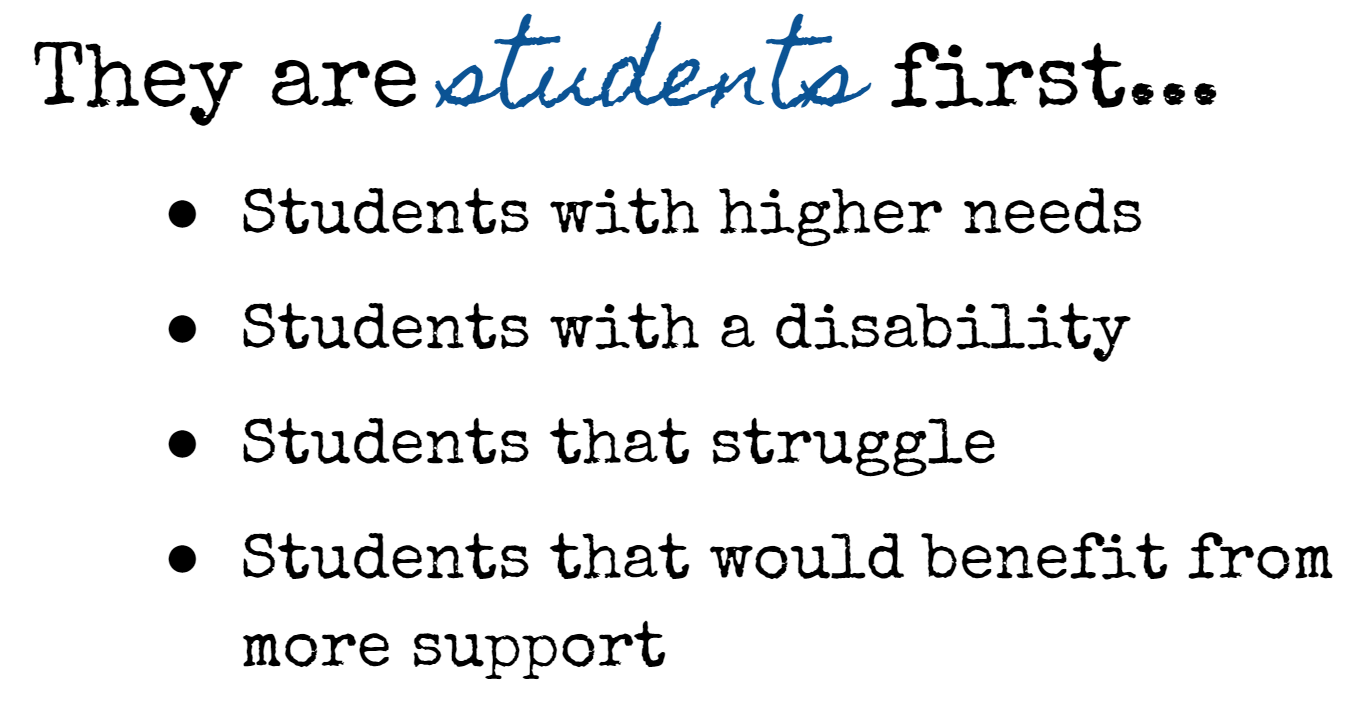
The first way we can give students with higher needs access to the math they deserve is to change the language that we use to talk to our students and how we talk about our students.  We need to stop labeling them and remember they are students first.

New Labels

When we think and speak about our students in a more positive light there’s something that changes inside of us.  We start to remember they are people.  That this student is someone’s baby.  We become far more patient, kind, and compassionate.  We’ll work a little harder and be more encouraging.  We’ll be more willing to give grace and we all know everyone can use a little more grace.

Words are Powerful

And since our words are powerful, what we say TO students and what we say ABOUT students matter.

Some students need to be reassure that they BELONG.  We can’t do that if we make them feel like they’re in the wrong class–like, they’re not good enough to be here or not smart enough to make it.  They need to know they are a vital member of our classroom and that they add value no one else can.  Our students struggle with anxiety and insecurities that we sometimes don’t even understand.  The way we speak to our students can make the biggest difference.  We can give students the strength and encouragement they need to push past whatever is holding them back so they can engage in the lesson and learn the math.  Some students need to be shown RESPECT to be motivated to do well.  They need to hear that they are valued, that their effort doesn’t go unnoticed, and that we respect them enough to meet them where they are.

Student Potential

We need to really see our students when they walk in the door…not their past mistakes or their disabilities…but each student’s potential to be the greatest student you ever have.

Increase Expectations Title

The next way that we suggest we can help students with higher needs access to the math they deserve is to keep high expectations.

So, when we use that negative language two things are in play:  First, when we say a student “can’t” do math we start to think that it’s actually true.  Second, our actions and educational choices start to convince our students that they should believe it’s true too.  When we say a student “can’t”, we give ourselves permission to make things easier for them and we lower our expectations of them.

Laura's Quote

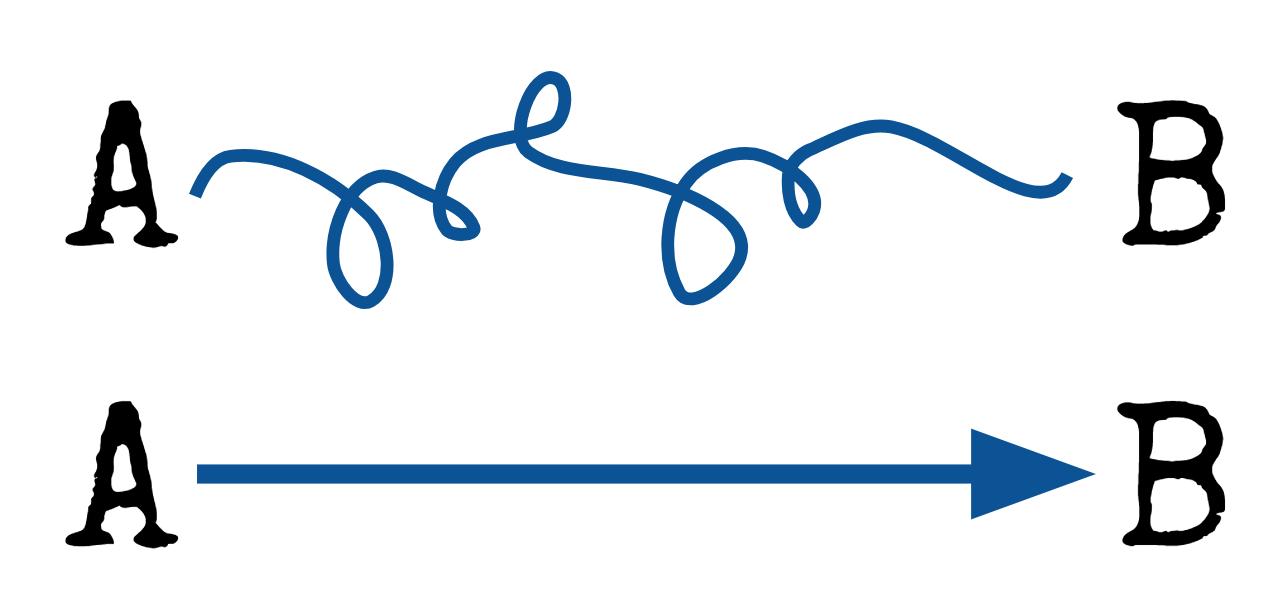
And I do believe we are trying to “help” or “support”.  And even though our hearts might be in the right place we stop challenging our students and we rarely give them opportunities to rise to the occasion,  In our efforts to help our students, our scaffolding turns into us reducing the rigor, lowering the DOK level, and making things easier for them.  When we say students “can’t” we take the wind out of our students’ sails by convincing them that they can’t do hard things…like math.  Let’s make sure that we are not part of the problem;  that we are not subtly influencing our students and undermining their ability by lowering expectations in an effort to “help” them.

A to B

And the scary part is that this happens in the background;  it’s subtle and so stealth.  We’re not announcing, for all to hear, that a particular student isn’t capable, it’s a subtle influence in the way we speak and act towards students that have higher needs.

Enhance Instruction Title

We had a really reflective and raw moment of clarity during my CMC session when I asked this question and asked teachers to share their responses:

What makes it hard.PNG

The responses were powerful;  what I realized is we needed a safe space to air out all our thoughts and feelings about what makes it challenging for us to teach students with higher needs.  Teachers needed an opportunity to admit what makes it difficult without the fear of judgement;  without the fear of appearing to not care or not have their students’ best interests at heart.  We all needed the chance to let it go.  And we did.  And if you were at my session thank you for that moment.  I encourage you to reflect and do the same.

So, with that said, we want to re-imagine what that support might look like.  One way is making some intentional additions or enhancements to your instruction.  Here’s a few ideas how to do that, and this is certainly not a comprehensive list, but a great start:

3 ways

What I hear from teachers most often is that students with higher needs lack prerequisite math skills and sometimes even basic math skills like number sense.  And what I hear most often from counselors and special education teachers is that students with higher needs take longer to process information and need extra time to let things sink in.

Juli Quote

So, instead we decide we’re stuck and we spend time practicing the prerequisite skills or basic skills in class that we end up not having time to do any cool math activities;  we reason that we just need to get them through the basics.  Or worse, we don’t even feel like we have time to practice those skills so we just press on and hope they get something from each lesson.  There is this constant tug of war between what we feel like we should do and what we would like to do.

Tug of War

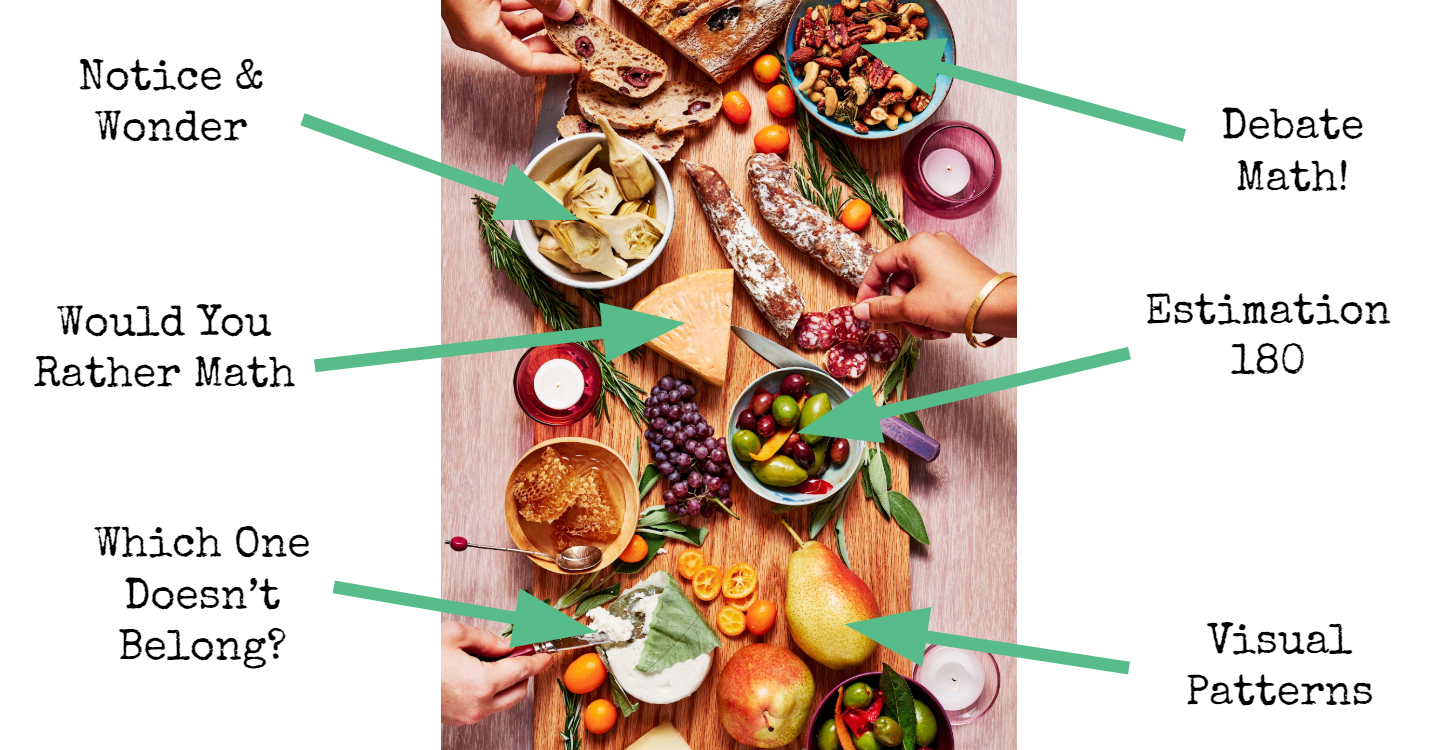
First, start class with what the Classroom Chef’s called Appetizers They’re essentially short activities that you do at the start of class to get them hungry for the lesson that is to come.  Think about what an appetizer does to you at the start of the meal;  it’s the same feeling we want to create for our students in our classes.  Here’s a few favorites of mine that I use in my classes.

Appetizers

My students were different on the days I did an Appetizer.  We started class more quickly and my students readily engaged in the lessons and activities I had planned for them.  And because these activities give students multiple entry points, all students can feel success at them.  One final solution wasn’t the goal;  communicating and thinking about math was.

Also, this is the perfect opportunity to build in those basic skills that we are always looking to practice but never seem to find the time in our busy pacing guides.  So, your students are struggling with percentages, throw in a Would You Rather? Math exercise.  If you wish your students had more practice writing linear equations, use a Visual Pattern to do that!  Or if you need your students to feel more comfortable speaking in class and sharing their ideas, try a Debate Math talking routine or a Which One Doesn’t Belong? exercise.

Twitter Quote

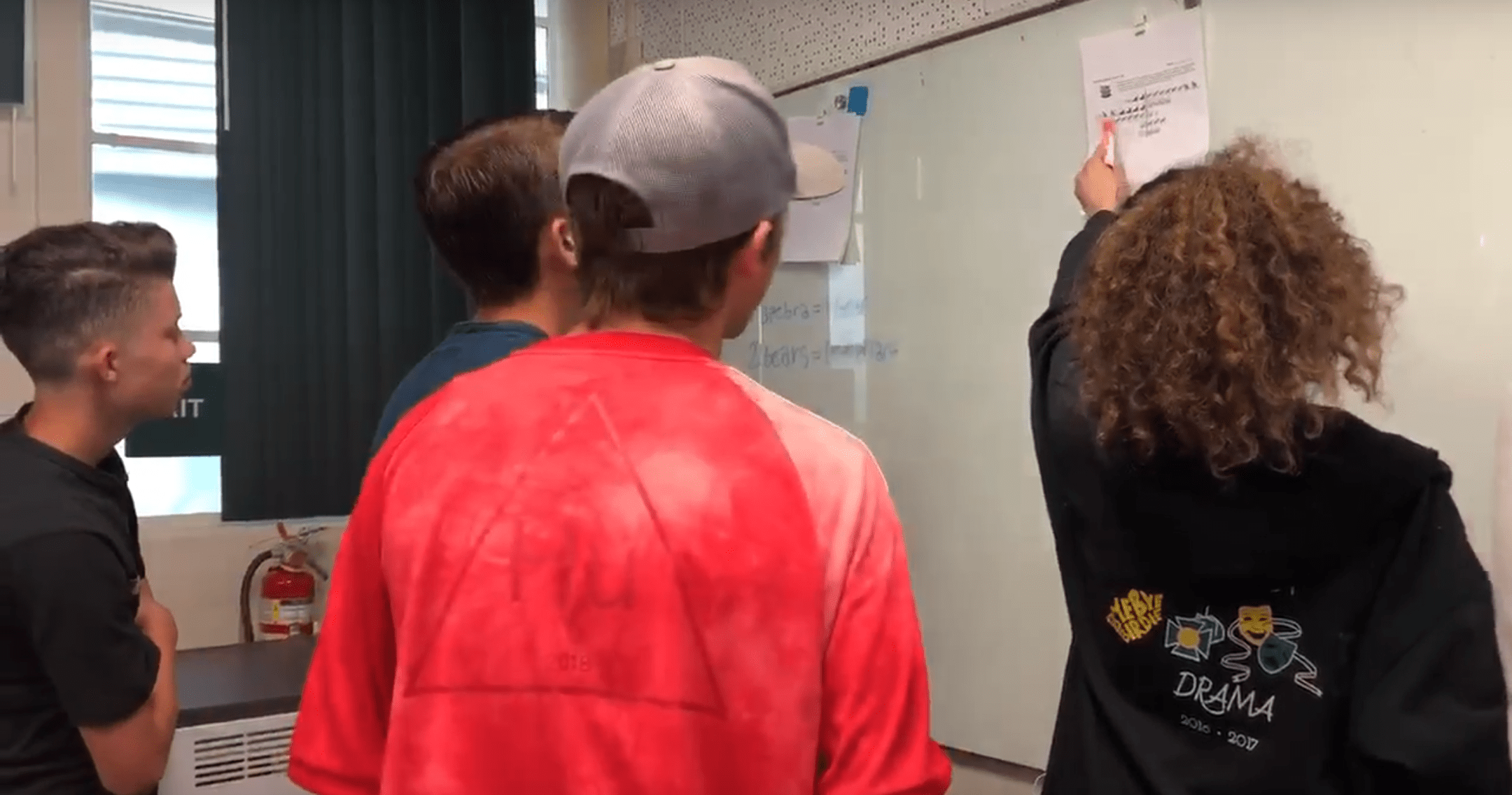
Second, get your students Up & Moving!  Many student with higher needs need the physical reset of their bodies to stay focused and motivated to learn.  Just a quick Google search on the benefits of movement will reveal to you how important it is to incorporate into any class, but especially classes that have students with higher needs.

Screenshot (4)

Thanks for sharing this photo of your students using the Vertical Non Permanent Surfaces (VNPS) in your classroom, @ClaireVerti

I have the pleasure of teaching math collaboratively thanks to the beautifully written educational program called College Preparatory Mathematics (CPM) and as a CPM Teacher Leader I have the opportunity to train other teachers amazing resources and skills to change classrooms into collaborative learning spaces.  Their Study Team Teaching Strategies are collaborative learning structures and many of them involve the kind of movement I’m suggesting we use.

Here’s a list of some of my favorite strategies, collected from the CPM Educational Program and the Math Twitter Blogosphere (#MTBoS), that allows us to incorporate more movement into our lessons.  Many of these don’t require a lot of prep work ahead of time and some can even be used on the fly when you notice your students dragging or starting to lose focus.

Third, use a Collaborative Closure activity to close the lesson.  So often our students are engaged in an amazing lesson that we thought we planned so well just to discover that nothing stuck.  Our students didn’t retain any information despite all our efforts to start with an appetizer and include movement.  We have to give students an opportunity to reflect on what they learned each day and allow them a chance to articulate that for themselves.

And I know, I get it…we barely have time to do the lesson that asking for one more thing almost seems impossible.  BUT…we also know that there are plenty of lessons we taught, and thought we taught well, that after assessing it was as if we never taught it at all!  So, it’s worth the pinch of time to make sure we give students a chance to summarize what they learned in class in a quick and collaborative way.  My challenge to us is STOP-DROP-CLOSE:  the last 10 minutes of class, set a timer if you have to, STOP teaching, DROP what you’re doing, and CLOSE the lesson.

Here’s a list of my favorite ways to do a Quick & Collaborative Closure.

3 points

Changing the language, increasing our expectations, and enhancing our instruction are three ways we can begin to give students with higher needs access to the math they deserve.

I wonder how many students with higher needs you have in your classes?  For me, it’s the majority of my students because of the way my classes have been populated.  More than half of each of my classes are students with higher needs.  I’m forced to adjust and differentiate instruction accordingly.  But I know for most teachers there’s just a handful of students with higher needs.  Many schools spread these students out among all the teachers in an effort to even out the load and share the responsibility.  I’ve heard the term “balance the classes” used to describe this.

That all sounds fair and equitable until we start to think about a traditional classroom.

Bell Curve

At the end of the grading period educators, from teachers to administrators, are accustomed to the “bell curve” or grades…this normal distribution.  It is acceptable to us to have a handful of students that are not passing.  We can’t win them all, right?

I wonder how many of those students that are not passing, that are struggling, are students with higher needs and have we done *enough* to make sure that they didn’t land there just because everyone expected it?

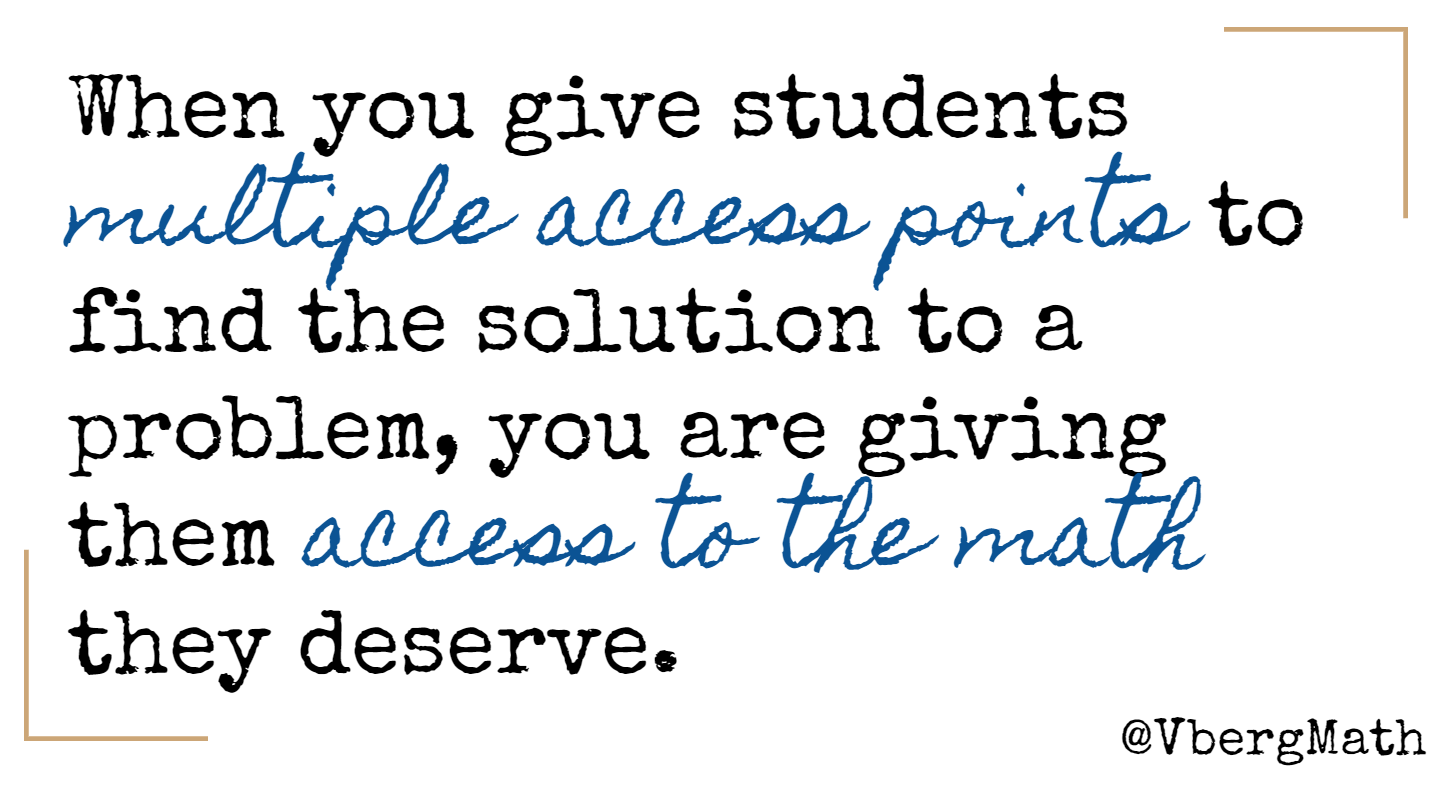
Let’s do all we can to give all students, especially those with higher needs, access to the math they *deserve*.

~PV

Debate Math!

Last weekend I attended the CPM Teacher Conference in San Francisco, CA.  It was a fantastic experience to not only be there but to also present a workshop and speak at the Ignite session–but more on that later.

One highlight of the weekend was attending Chris Luzniak‘s session on Debate Math.  In his presentation, Chris describes that an argument consists of 2 answers:  a claim and a warrant.  Then, when asking a mathematical question, Chris instructs his students to use this sentence frame to state their argument:

“My claim is __________________,

and my warrant is _________________.”

He began the session with some fun, non-math questions that we debated:

  • What’s the best TV show?  

My argument:  My claim is Friends is the best TV show, and my warrant is that the writing is very witty and the actors play their parts so well.

  • The most important thing I want my students to learn is ___?  

My argument:  My claim is that I want my students to learn that every one of them can do math, and my warrant is that hard work pays off.

Then Chris began asking us math related questions and continued to have us debate using the same routine of argument = claim + warrant.  As I listened to people’s arguments, I tried to imagine what it would look like to implement this in my classroom with my students.  Then, Chris puts up this slide:

img_5506.jpg

I was sold!  I thought about how many times I had tried to get my students to understand how to write 2-column proofs in Geometry with no real success and unfortunately, most teachers I’ve collaborated with regarding this topic haven’t had anything as exciting as this.  And I couldn’t have asked for better timing as my lesson plans for the following week included flow chart proofs on congruent triangles in Integrated Math 1 and 2-column proofs of properties of quadrilaterals in Integrated Math 2.

I got home from the conference and got to work right away!


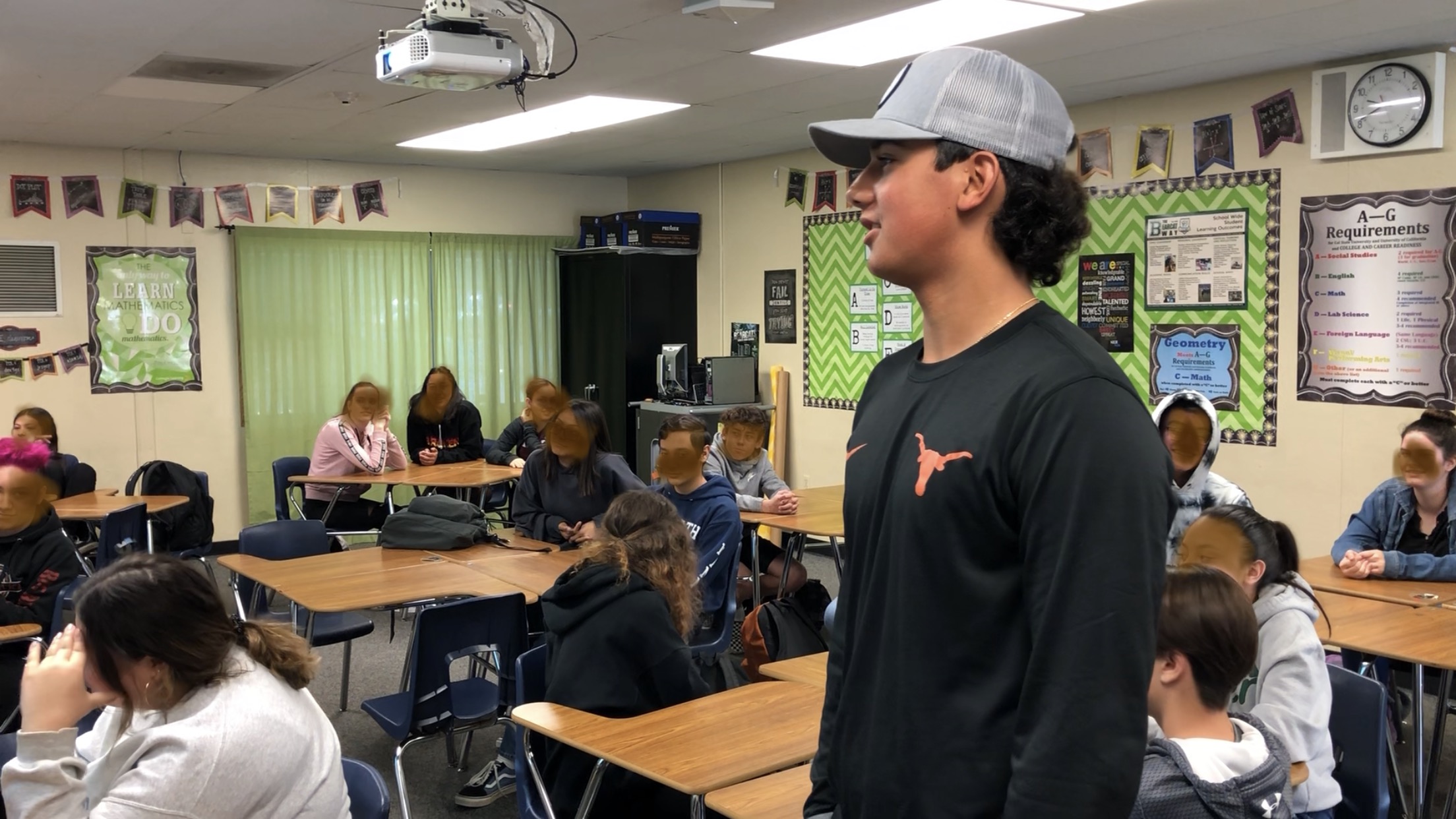
Day 1:  The Monday after the conference we happened to have a minimum day so it was the perfect amount of time to introduce the debate structure to my students.  I used this slide deck in Integrated Math 2 and had them practice using the sentence frame with non-math topics and then a few easy math questions.  I followed Chris’ debate structure including asking students to stand while making their argument.

IMG_5545

The most surprising thing was that the students that typically don’t participate or engage much were the ones debating the most!  I had students that never want to take notes or do any math during class *jumping* out of their seats to make an argument.


Day 2:  In Integrated Math 1 we began a unit on congruent triangles.  We had really only done the first lesson where my students learned that 2 figures are congruent if (1) there is a series of rigid transformations that maps one object onto the other and (2) all the corresponding angle and side measures are congruent.  So, I began the next lesson with this slide deck (remember that I had already spent the day before going over the structure and sentence frame). 


This slideshow requires JavaScript.

The question was “Are the shapes congruent?” and my students, just on day 2, already knew to stand up and use the sentence frame, “My claim is…, and my warrant is…”  All the slides led to the reinforcement that all corresponding angle and side measures must be equal for the shapes to be congruent.  The last slide in the deck was this one:

IMG_5552

For this one, students needed to calculate missing angle measures using the Triangle Angle Sum Theorem and calculate the missing side lengths with Pythagorean Theorem.  As they found missing measurements, my students stood and clearly argued how they found each missing angle measure and side length:

“My claim is the missing angle is 20.61 degrees, my warrant is the sum of the 3 angles is 180 so if I add 69.39 and 90 together, then subtract from 180 I get the missing angle [measure].”

“My claim is the missing side length is 125 feet, my warrant is when I use Pythagorean Theorem, 44 squared plus 117 squared equals c squared…then I take the square root and get 125 feet.”

This was a great way to open the lesson and get them primed for the triangle congruence conditions. They had already argued clearly what it meant for triangles to be congruent and they were ready to discover the shortcuts to determining triangle congruence (SSS, SAS, ASA, AAS, and HL).  


One of the Standards of Mathematical Practice tell us that students should be able to construct viable arguments and critique the reasoning of others (SMP3).  The structure of Debate Math helps students do just that!  

As I listened to my students make their arguments, I realized even more reasons why I love Debate Math:

  • Having to say their idea around the words “claim” and “warrant” made them instantly elevate their vocabulary and use of academic language.
  • Students making their argument spoke slowly, clearly, and with authority.
  • Students were listening, not just respectfully, but intently to each other;  making sure they used the sentence frame properly and checking that their warrants were solid and valid.

And things just keep getting better:  Days 3 and 4 we were writing flow chart proofs and the words claim and warrant felt more organic to the process than teaching them to use the traditional language of “statements” and “reasons”. 

Needless to say I’m so excited to get to 2-column proofs!  Wow, did I really just say that?!

~PV~


The Most Wonderful Time of the [School] Year

A teacher LIT ME UP today and it was unnecessary and so awkward.

It’s the most wonderful time of the school year.  All of us are so exhausted and tired and overwhelmed and…testy.  Everyone’s on edge because of the stress of closing out the first semester that we lose our patience with each other.

Related image

I can only assume that this teacher was also tired and on edge and because of that she took out her frustration on me.  While this was a really negative interaction, that I do hope we can get past, I did learn a few things about myself.

To explain, let me share what happened:


Last year our district decided that we were going to move towards common assessments in lieu of benchmarks.  As teachers, we were thrilled at the idea that we wouldn’t have to give up class time to administer these extra standardized tests.

Well, it’s final exam season and as a Lead teacher I am responsible for working with my team to finalize the semester 1 final exam.  After discussing with everyone, and going back and forth with edits via email, we finalized the final exam.

The day before we were to administer the test one of our teachers asked if she could change one of the problems, just for her test, because she felt her students needed a different version of the problem.  She assured me it would cover the same standards as the original question.

I was quick to answer.  As she was explaining it to me it all sounded good.  It sounded logical;  she would be covering the same standard on her assessment as the original.  The math would be the same.  No big deal, right?

Me:  “Sure, that sounds fine.  No big deal.”

Teacher:  “Okay, are you sure?  You’re fine with me changing it?”

Me:  “Yeah, you’re covering the same math so it’s fine.  Go ahead!”

This conversation probably took a whole of 3 minutes.  When I got off the phone I immediately had a weird feeling about my decision.  While it all sounded very logical I started replaying other conversations I had the previous week, about this exact final exam, with our assistant principal (AP) that supervises the math department.

I remembered that our AP was not happy that our assessments were not the same.  You see, we had to write a separate final for another teacher on our team that is a chapter and a half behind the rest of us.  Even though it was obviously necessary for that teacher to have a different final, our AP was still not happy about it.  I realized that I probably spoke too soon and maybe it wasn’t the best idea to have authorized now technically a third version of the final exam.

So, I called the teacher back and explained all of this.  I explained that the intent is for us to have common assessments and if we continue to allow each other exceptions to the rule, however minor they are, we will never get to where the department is trying to go.  And because we had so much back and forth about this particular final with our AP, I expressed that we should run it by our AP first before she changed the final.

It did not go over well and that’s when our conversation went south (like, really south.)  I should note that this isn’t like her;  we have a great working relationship and I was floored by all of this.  Maybe it’s because she didn’t get her way, maybe it’s because I changed my mind and came across indecisive, maybe it doesn’t have anything to do with me or maybe it has everything to do with me.  In any case, that’s how it went and it was awkward.


So, what did I learn from all of this?

  1.  I’m so grateful to be a Lead teacher.  It’s a low-stakes, little leadership role in our department;  it’s a great opportunity for me to take risks and make mistakes, so that I can learn and grow.
  2.  I want my yes’s to mean yes and my no’s to mean no.  I don’t want to come across indecisive or give the impression that I’m not certain of the decisions that I make.  When I had to call back to change my mind, I wonder if it seemed like someone else influenced me after the fact and if that makes me appear to be easily persuaded.  I want to communicate that I’m confident in my decisions.
  3. I’m a people pleaser and, “yes,” sits on the tip of my tongue all the time.  For me, saying “no” feels like I’m shutting someone down.  I want to encourage creative ideas and make people feel validated.  I can accomplish that same thing, but also make confident and solid decisions, by saying the phrase, “Let me think about it and get back to you,” instead of an immediate, “Yes!”  I’m pretty good about looking at situations from all angles;  saying this phrase buys me the time I need to analyze something completely to make a sound decision.  I’m going to practice saying it so that phrase sits on the tip of my tongue at all times.

Eleanor Roosevelt

Eleanor Roosevelt had it right and I’ve got a lot to learn.

~PV~

Circus Animal Cookies: Predictions, Association, and Line of Best Fit

I teach Integrated Math 1 and during a Team meeting we were looking for ways to start a new unit on modeling two-variable data.  We knew we wanted the first lesson to set a positive tone for a new unit being introduced during a time of year when we are starting to get tired.  Like, is it winter break yet?

This first lesson needed to:

  • Remind students how to take data and transform it into a scatter plot
  • Remind students how to describe the association of the scatter plot
  • Review how to draw a line of best fit they feel best models the data and then write the equation of that line
  • And most importantly (well, for me anyway) be fun and memorable for our students!

We are blessed to have a department of math teachers that happily collaborate and share their cool stuff so we immediately turned to our resident statistician, Ricky Yip.  He teaches our AP Statistic classes and we had a feeling he had something good.

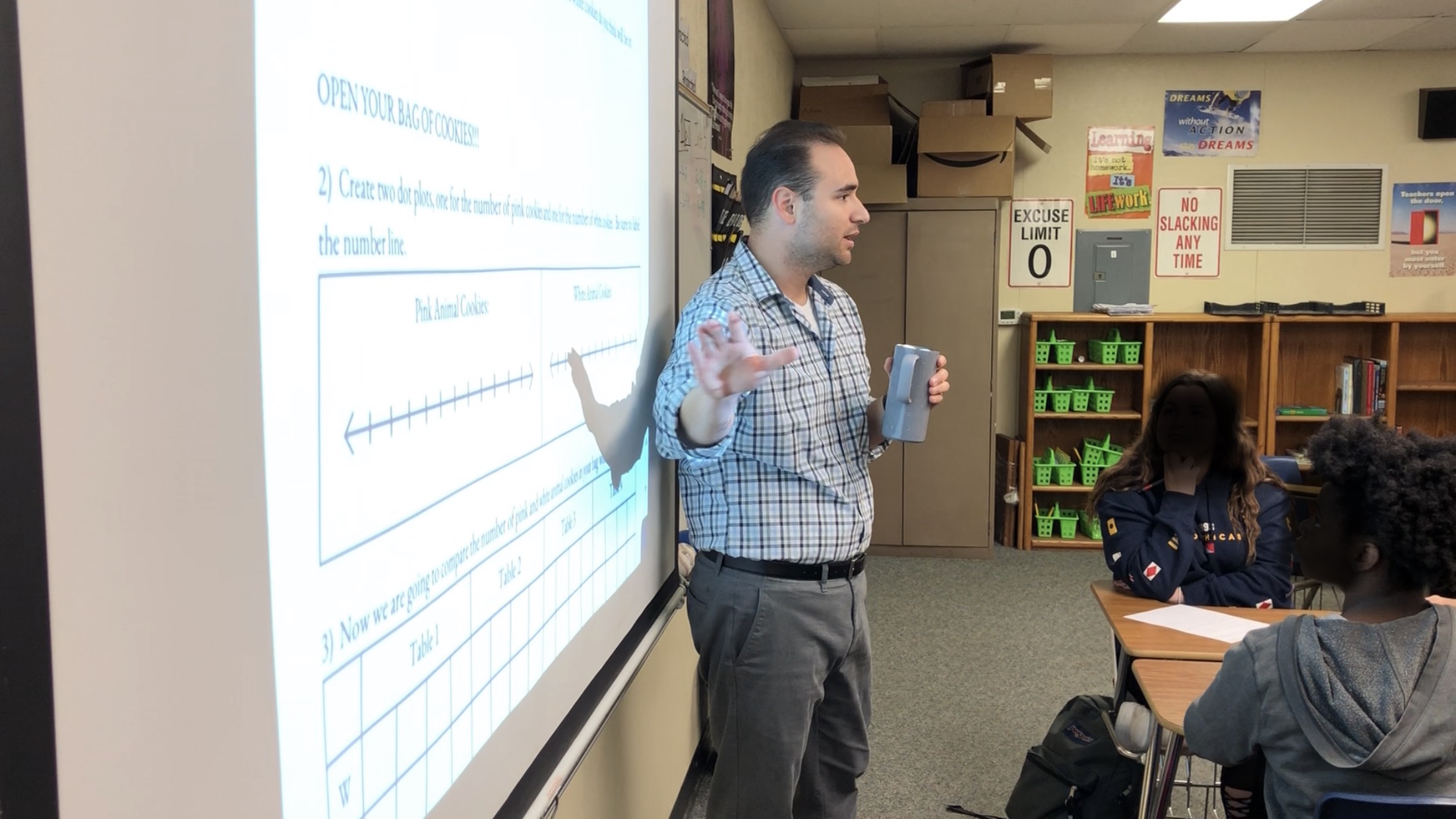
We were right!  Ricky shared with us that he uses Circus Animal Cookies for a similar lesson.  Our team took his idea and ran with it.  We built a lesson around our students working collaboratively to collect data and discover the math.


Here’s how the lesson goes:

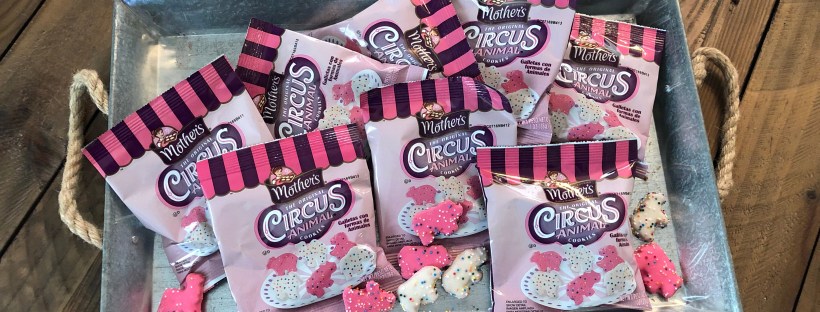
We start with students sitting in teams of 4 and we give each student a small, snack sized bag of Circus Animal Cookies.  Already, we are off to a great start because who doesn’t love cookies?

img_4333.jpg

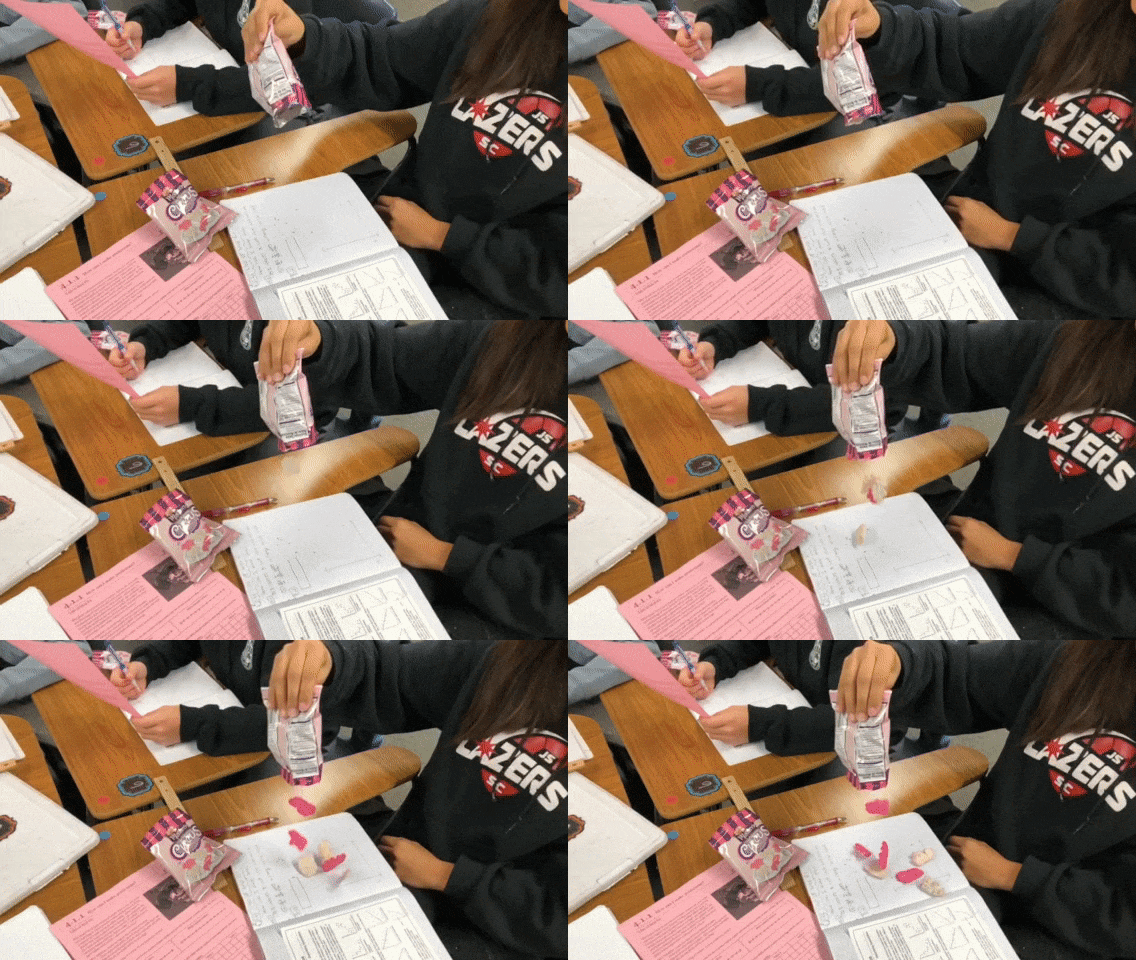
Problem #1:  Students are asked to examine their bag of Circus Animal Cookies and predict how many cookies they have and how many pink versus white cookies are in their bag.  Then they get to open their bag of cookies and see if their prediction was correct!

Circus Animal Cookie Drop

Problem #2:  After each member of their team has recorded their data (pink versus white cookies) students represent their data on a dot plot.  My colleague, Adam Varnes, took this opportunity to bring up students’ work to display and discuss domain and range of the data.

IMG_4553

Problem #3:  At this time students are instructed to collect data from all the other teams in the room.  In my class, I have 9 teams, and each student has a role.  Each team has a Reporter so I asked each of them to write their team’s data on the board for all to copy.  Students take the class data and create a scatter plot.

IMG_4351

Problem #4:  This problem gives an opportunity for students to review how to describe the association of a graph:  form, direction, strength, and outliers.  After describing our Circus Animal Cookie scatter plot, students realize that the data could be modeled with a line.  Students draw a best fit line and share their strategies with how to draw it with the class.  Students are asked to explain what the slope and y-intercept represented in the context of this problem and then write the equation of the best fit line.

Closure:  We wrap up the lesson with a Whiparound.  I ask each team of students to share one thing they learned today with the class.  When I call on their team, the Reporter is the one who shares for the team.  Students aren’t allowed repeats so they must share something new.  As they share, I compose a list on the board of their responses;  making sure to focus the discussion on how to describe the association of the scatter plot and how to find the equation of the best fit line.


If you’re interested in running this lesson, here’s the handout we gave to our students:  Circus Animal Cookies Lesson   I’d love to hear about how the lesson went for you and what improvements you made!

We are so pleased with this lesson and how well our students responded to it!  In fact, there were several times during class that I thought my students were off task because they seemed to be enjoying themselves too much!  Much to my delight, when I questioned them on their work they answered both correctly and with confidence.

A fun and memorable lesson for our students—check!

~PV~

A Seat at the Table: CMC South

This past weekend was the annual California Mathematics Council Southern Conference held in Palm Springs, CA.  It’s one of my favorite weekends of the year. Brilliant educators from all over the country converge to share strategies and inspiration with one another.  It’s an opportunity to connect with colleagues and discuss math – all the time.

This slideshow requires JavaScript.

One of the highlights of the weekend was a conversation I had with John Stevens.  He’s the one at the end of the table, pictured in a chef’s coat (here’s why). He’s a Math and Technology Coach in Southern California, an author, a husband and father, and an Edu-hero and Math-lebrity in the math community (although he’ll tell you no to that).  In short, he’s kind of a big deal.

Imagine my surprise when I discovered he would be joining us for lunch on Saturday afternoon.  We have a mutual friend and I tried to contain my inner fan girl when we walked to the restaurant together.

giphyJohn and I had an opportunity to connect as we waited for our friends to arrive for lunch.  We started off with some small talk about how we were enjoying the conference and what we were going to order for lunch.  He acknowledged that I had presented at the conference the day before and John’s next sentence began like this,

“Now that you [Patricia] have a seat at the table…”

…and I honestly don’t remember the end of this sentence because I think I blacked out a little…

I have a seat at the table?  I…have a seat at THE TABLE?

You see, I’ve been a teacher for 14 years and I have attended this conference almost every year for the last 12 years but this was the first time that I was brave enough to be a speaker.  I had the privilege of co-presenting a session with Matt Vaudrey (yes, theeeeeee Matt Vaudrey).  It was an amazing experience and it was affirming to get some positive feedback from several teachers that stayed after to ask questions and say such nice things.  

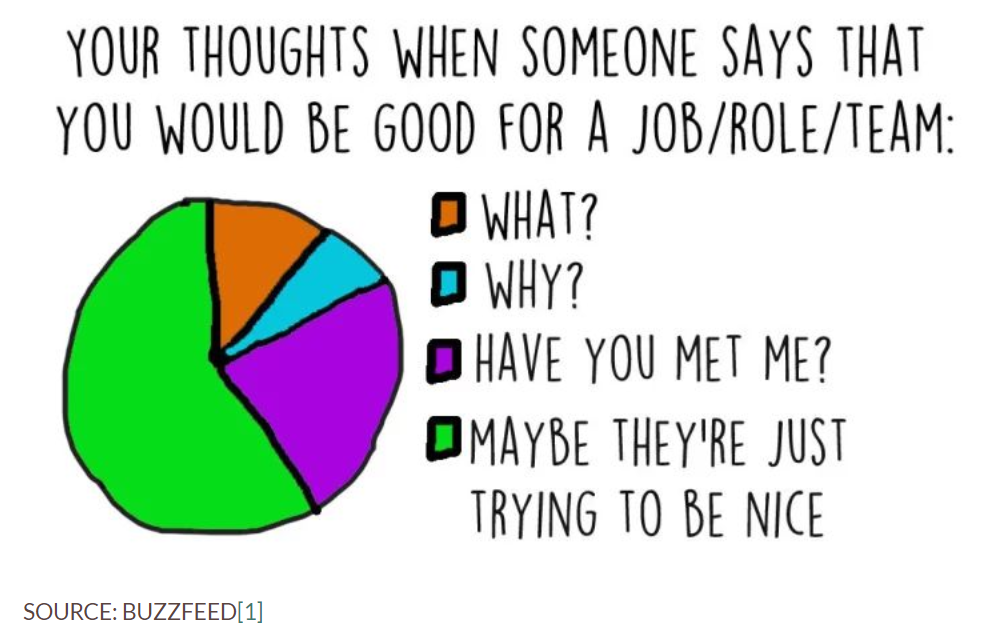
I shared with John that there’s a constant battle in my head when it comes to me sharing anything I’ve done in my classroom in a public forum.  On one shoulder there’s a little guy telling me that what I’m doing is awesome and I should share it with others and on the other shoulder there’s a different little guy telling me, “this is old news, everyone knows [insert whatever cool thing I’m doing here] so don’t embarrass yourself by thinking you have something to contribute.”  

Imposter Syndrome

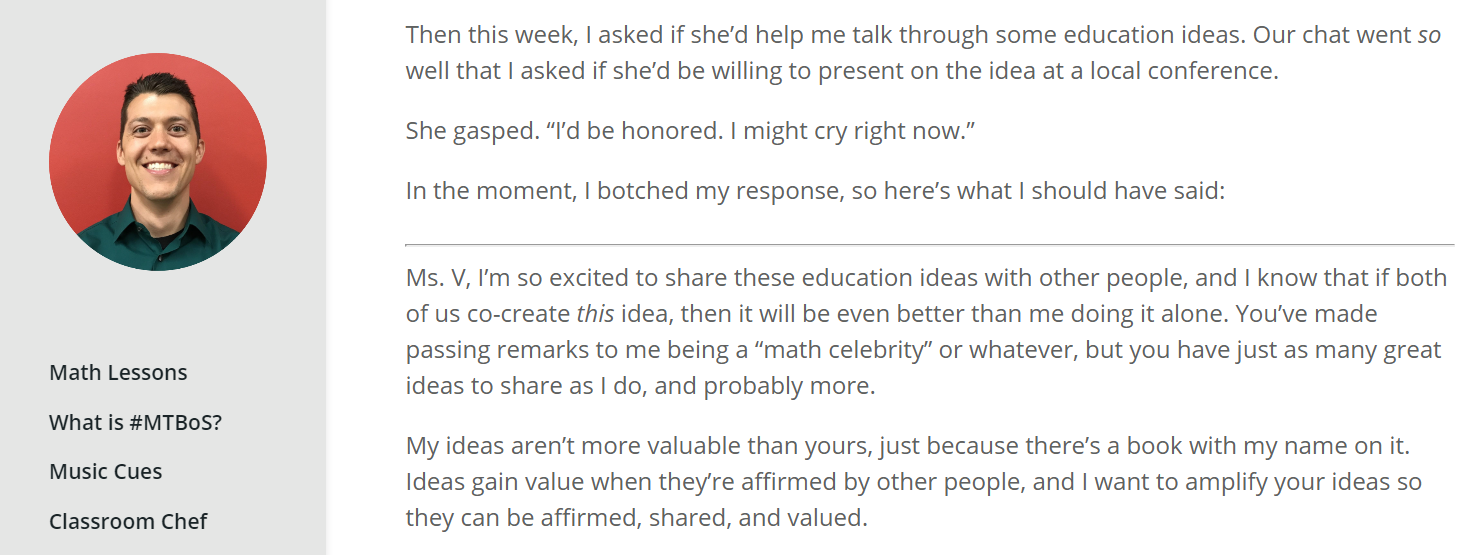
John quickly stopped me, with a chuckle of disbelief at my statement, and reminded me that there is such a thing as “imposter syndrome,” and that I just needed to get over that because it’s holding me back.  John helped me to realize that it’s not always about sharing something new; it’s also just as valuable for teachers to hear how we’ve taken something we’ve learned and made it our own.

Y’all, this guy is the real deal.  He went on to share with me that he’s experienced times when he thought he had nothing else to share even after co-writing The Classroom Chef and writing Table Talk Math, the Would You Rather? site, and an extensive blog of really cool stuff.  I can’t thank him enough for the very real, humble, and encouraging conversation.  I really appreciated those few minutes with John and his affirmation that I have a seat at the table.  

I should also note that Matt Vaudrey has pulled up a chair for me at the table on more than one occasion and I’m blessed because of it:

Matt's Blog-we're the same

I’m glad I finally sat down.

I realized during this conference that there are so many talented teachers doing great things in their classrooms that make a big difference in the lives of their students.  We need to hear from them too;  their voices, their stories, their strategies so that we can all be better.  

And yes, someone may have already said [insert whatever cool thing you’re doing here] before…but not in the way you’ll say it and not in the way you’ve done it and not at the time that you’ll share it with others.  

I’m saving a seat for you.

~PV

Book Review: The Boy Who Loved Math

It’s finally summer!  The long and exciting school year was immediately followed by our 5 week summer school program.  So, for me, I’m 5 weeks late but I am finally enjoying some downtime with my family.

When I first became a mom I assumed I would be spending time teaching my kids the basics;  after all, I am a math teacher. When I was pregnant, I spent so much time looking for cool activities, and at-home lessons on letters, colors, numbers, because I had this expectation of myself as a Teacher-Mom.  All I can say is that I am so grateful that we have the best daycare provider that has taught my boys most of those things because I learned very quickly that I am less “Teacher” and more “Mom” with them (as it should be).

But, I definitely can’t help myself when it comes to reinforcing the math skills in my children.  My boys knew their numbers and how to count well before they could recognize colors and letters.  Our boys’ playroom is well stocked with math games, logic puzzles, building blocks, tangrams, and several number related children’s books.  

IMG_3481

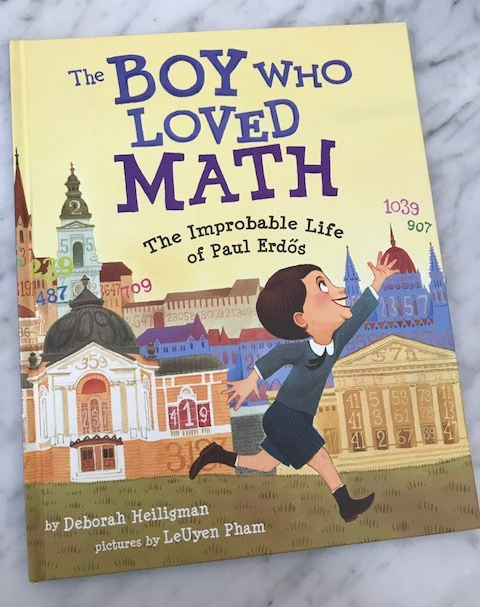
One day I came across a book while shopping on Amazon called, The Boy Who Loved Math, the Improbable Life of Paul Erdos written by Deborah Heiligman and illustrated by LeUyen Pham.  A book about a boy who loved math? This boy mama couldn’t add it to my shopping cart fast enough.  In fact, I bought it so fast I didn’t even realize it was a book about Paul Erdos. It came in the mail 2 days later, courtesy of Amazon Prime, and it was our bedtime story that night.

I thought I was just adding to our library of children’s books.  I had no idea how much joy this book would bring!  It was published in 2013 and I wish I found it sooner! 

I love it so much and here’s why:

  1. IMG_3485.jpgIt’s a true story about Paul Erdos, a real mathematician that’s influenced and improved our lives through the math he’s done and shared with others.  I love that it brings to light the importance of collaboration. Paul Erdos spent his life traveling around the world working on math with other mathematicians because he knew this was the way to develop, “…more and better math.”
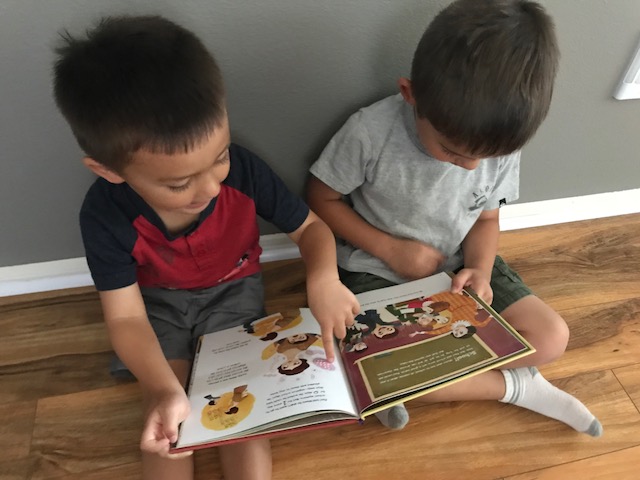
  2. It makes reference to more advanced math than I’ve seen in the math related books we have at home.  My 5 year old son is now asking me about negative numbers and prime numbers;  this makes my heart happy because this book has sparked curiosity in my son. He asked me what infinity is and I wish I had a picture of my son’s face as he tried to process the information.  What better way for a young mind to learn? It makes reference to Number Theory, Combinatorics, Set Theory, and the Probabalistic Method; we’re not just counting in this children’s book!IMG_3497.jpg
  3. It’s written in a beautiful way that makes math approachable and interesting.  I love how Heiligman describes Erdos’ curiosity about numbers and his efforts to be a problem solver.  Heiligman uses math terminology in ways a mathematician would, “Mama loves Paul to infinity” and “…all day, 100% of the time.”
  4. But hands down, my favorite part of this book are the *beautiful* illustrations.  LeUyen Pham is clearly a talented artist but what is most impressive is that there is meaningful math illustrated all throughout the book.  There’s even a thorough description of the illustrations at the end of the book.  This is the beauty of mathematics that I want my boys to see:

    IMG_3486

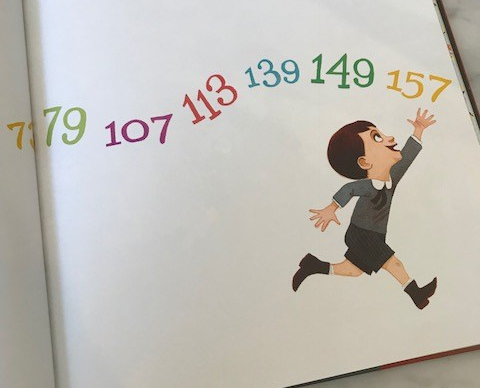
    What looks like a young Erdos chasing after an arbitrary set of floating numbers is actually a list of the Harmonic Primes.

  • IMG_3487

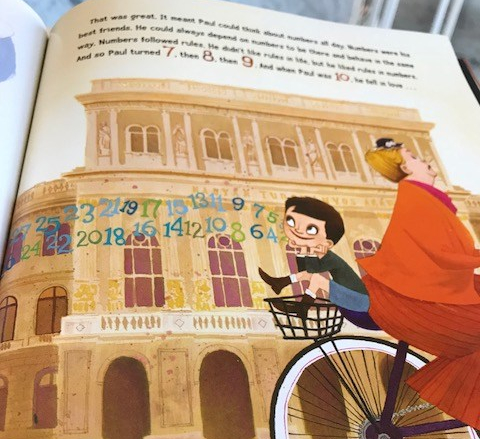
    I love young Paul’s dreamy gaze as he thinks about even and odd numbers.

    IMG_3488

    The dotted lines on this page are a solution to one of Erdos’ problems he posed to mathematicians:  Can a square be dissected into squares of different sizes?

I can’t appreciate this book enough–it’s so thoughtfully written, it’s light and fun for kids, and I’m loving the math written in the story lines and drawn in the illustrations.  I’ll confess, I don’t remember much about Paul Erdos in my own studies that it’s inspired me to learn more about him. This story is adorable and I’m happy to read it to my boys and inspire them to dream about numbers.

~PV~